
📑 Table of Contents ▶
- Spicy Seafood Noodle Soup Fundamentals
- Fundamentals
- Preparation/Setup
- Directions
- Exploring Methods for Spicy Seafood Noodle Soup
- Technique
- Tips/Tricks
- Perfecting Your Spicy Seafood Noodle Soup
- Perfecting Results
- Troubleshooting/Variations
- Serving and Storing Spicy Seafood Noodle Soup
- Serving/Presentation
- Pairings/Storage
- Conclusion
Spicy Seafood Noodle Soup
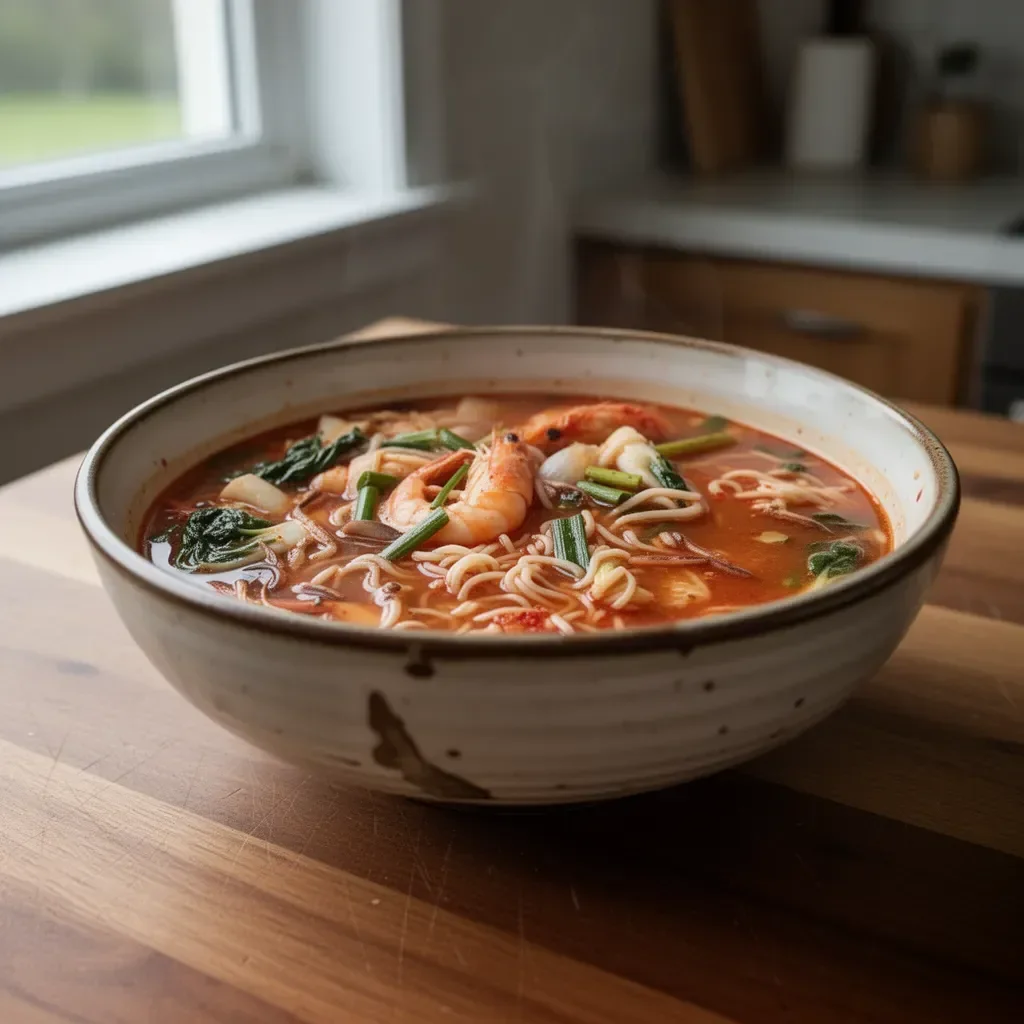
Creating a dish that warms the body and soul is a goal for many home cooks. Spicy seafood noodle soup does just that, bringing together flavors and textures that excite the palate. There’s something magical about a comforting broth filled with fresh, vibrant ingredients. The tender noodles swirl around perfectly cooked seafood, creating a symphony of taste.
The experience of tasting spicy seafood noodle soup often brings back memories of enjoying meals with family and friends. The aroma of garlic and spices fills the kitchen, drawing everyone in as they anticipate the deliciousness to come. Preparing this soup is not just about feeding the belly; it’s about sharing a moment of joy and connection. Each spoonful represents flavor-packed ingredients that unite in a warm embrace, perfect for cozy gatherings.
This spicy seafood noodle soup embraces the vibrant flavors of Korea, featuring seafood like shrimp and clams, combined with fresh vegetables and noodles. The heartiness of the soup satisfies even the hungriest of appetites. Dive into this recipe, and you’ll discover how easy it is to bring comfort food home in just one pot. Embrace the spices, seafood, and noodles that promise a delicious culinary experience every time.
Spicy Seafood Noodle Soup Fundamentals
Fundamentals
Understanding the fundamentals of spicy seafood noodle soup lays the groundwork for a delicious meal. Each ingredient plays a crucial role, contributing to the overall flavor and texture of the dish. Fresh noodles provide backbone, while seafood enhances the soup’s umami profile. The combination of spicy gochujang and gochugaru elevates the dish into a whole new level of flavor.
Cooking this dish involves a few essential steps. Start by preparing your ingredients, ensuring everything is fresh. Each component, from vegetables to seafood, deserves attention for the best results. Gathering your ingredients ahead of time simplifies the cooking process, allowing a seamless, stress-free experience. Before diving into the cooking, take a moment to appreciate the vibrant colors and enticing aromas of your ingredients.
Preparation/Setup
Proper preparation sets you up for a successful cooking experience. Begin by focusing on mise en place, where you arrange and measure out all your ingredients. Minced garlic and onions add aromatic depth. Having your seafood—shrimp, clams, squid, and scallops—ready ensures timely cooking, preventing overcooked or rubbery seafood.
Prepare your vegetables, including napa cabbage and bok choy, by cutting them into bite-sized pieces. This step not only enhances the presentation but also facilitates even cooking. The silky texture of the noodles will harmonize beautifully with the tender seafood and vegetables, culminating in a nourishing bowl of comfort.
Ingredients
For this recipe, gather the following ingredients to create the perfect spicy seafood noodle soup:
- 8 oz. (230g) Korean fresh noodles
- 2 tablespoons cooking oil
- 3 cloves garlic (minced)
- 1/2 small onion (peeled and cut into pieces)
- 8 oz. (230g) medium-sized shrimp (10-12)
- 12 oz. (350g) Manila clams
- 4 oz. (125g) squid (cut into rings)
- 4 oz. (125g) bay scallops (or sea scallops)
- 4 tablespoons gochujang (Korean Chili Paste)
- 1 tablespoon gochugaru (Korean chili powder)
- 4 cups chicken broth (or bone broth)
- 4 oz. (125g) napa cabbage (cut into pieces)
- 4 oz. (125g) bok choy
- 1-2 tablespoons soy sauce (or to taste)
- Salt (to taste)
- 2 stalks scallions (cut into strips)
Directions
- Cook the fresh noodles according to package instructions until al dente. Drain and set aside.
- Heat a pot over high heat with cooking oil. Add minced garlic and onion, stir-frying until aromatic.
- Introduce the shrimp, clams, squid, and scallops to the pot. Stir well and mix in gochujang and gochugaru.
- Pour in the broth and add napa cabbage and bok choy. Bring to a quick boil.
- Adjust flavors with soy sauce and salt.
- Add reserved noodles and cook for 30 seconds.
- Stir in scallions and remove from heat. Serve immediately.
Exploring Methods for Spicy Seafood Noodle Soup
Technique
Mastering the technique for spicy seafood noodle soup ensures that each ingredient shines while blending harmoniously together. Start with high heat to achieve a quick sauté of garlic and onions, unlocking their flavors. This step adds a wonderful aromatic base to the broth and enhances the overall taste.
Cooking seafood requires careful attention. Adding shrimp, clams, squid, and scallops at the right moment is crucial. These ingredients cook quickly, which keeps them tender and prevents the dish from becoming rubbery. Striking the perfect balance in cooking time maximizes flavor while maintaining textures.
Tips/Tricks
To make the cooking process even smoother, consider these tips and tricks. Always prep ingredients before beginning to cook. This step saves time and keeps the cooking experience organized.
For added depth, use homemade chicken or bone broth instead of store-bought options. The flavor difference is noticeable and elevates your soup to restaurant-quality. Experiment with the level of spice based on your preferences. Adjust the amount of gochujang and gochugaru to find the perfect heat that suits your taste.
Perfecting Your Spicy Seafood Noodle Soup
Perfecting Results
Achieving perfection in your spicy seafood noodle soup involves attention to each step. Start by ensuring your broth simmers gently, allowing all the flavors to meld together. Adding vegetables midway through cooking ensures they retain their vibrant colors and crunch.
Experiment with the types of seafood you use. The variety of clams, shrimp, and squid adds an exciting layer to the dish. Finding a balance between flavors, spices, and textures is key to creating a bowl of soup that feels balanced and satisfying.
Troubleshooting/Variations
If you encounter challenges, there are common troubleshooting tips available. For instance, if the soup becomes too salty, you can counterbalance it with a little sugar or a splash of additional broth. If the soup lacks depth, consider adding a bit of fish sauce for an umami kick.
Variations can enrich the experience. Substitute other seafood according to your preferences or availability, such as mussels or crab. Incorporating different vegetables can also enhance the texture and nutritional value of the soup. Consider adding mushrooms or bell peppers for additional layers of flavor.
Serving and Storing Spicy Seafood Noodle Soup
Serving/Presentation
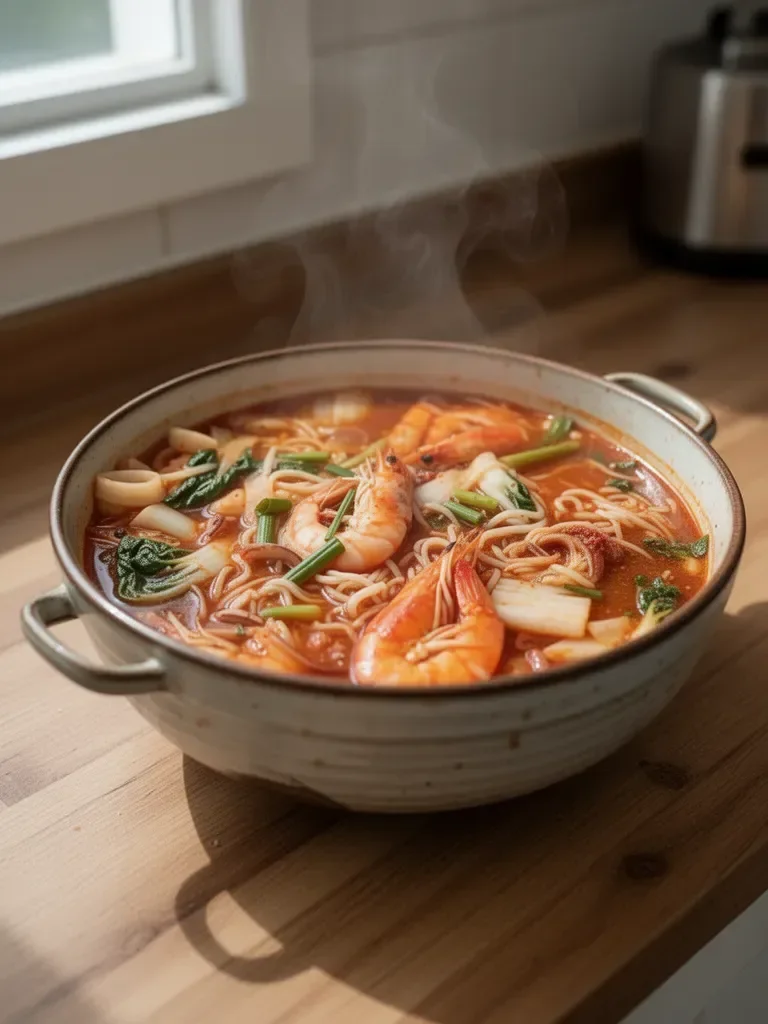
For an appealing presentation, serve spicy seafood noodle soup in deep bowls. A sprinkle of scallions on top not only adds a fresh pop of color but also enhances the visual appeal. Serving with a side of kimchi elevates the meal, providing an additional layer of flavor that complements the soup perfectly.
Encourage guests to customize their bowls. Provide extra soy sauce, chili paste, or additional vegetables to allow everyone to tailor their experience. The social aspect of creating a personalized bowl becomes a delightful part of the dining experience.
Pairings/Storage
When it comes to pairings, consider serving side dishes like pickled vegetables to enhance the experience. Fresh greens or salad can balance out the hearty soup, providing a refreshing contrast.
For storage, allowing any leftovers to cool before transferring them to an airtight container is essential. This soup can remain in the refrigerator for a couple of days, making it ideal for meal prep. However, it’s best to store the noodles separately to prevent them from becoming soggy when reheating. Simply reheat on the stovetop, adding additional broth if necessary to restore its delicious soupiness.
Conclusion
Creating spicy seafood noodle soup offers a delightful dining experience that warms both the heart and the palate. Each ingredient contributes uniquely to the rich and satisfying soup. By mastering the preparation and techniques, you enhance the joy of cooking while enjoying delicious food with family and friends. Embrace the flavors and textures that spice up every bite, and discover the rewards of making this incredible dish at home.
Print
Spicy Seafood Noodle Soup
- Prep Time: 15 minutes
- Cook Time: 15 minutes
- Total Time: 30 minutes
- Yield: 4 servings
- Category: Soup
- Method: Cooking
- Cuisine: Korean
- Diet: Pescetarian
Description
A comforting and flavorful soup filled with shrimp, clams, and noodles in a spicy broth.
Ingredients
- 8 oz. (230g) Korean fresh noodles
- 2 tablespoons cooking oil
- 3 cloves garlic (minced)
- 1/2 small onion (peeled and cut into pieces)
- 8 oz. (230g) medium-sized shrimp (10-12)
- 12 oz. (350g) Manila clams
- 4 oz. (125g) squid (cut into rings)
- 4 oz. (125g) bay scallops (or sea scallops)
- 4 tablespoons gochujang (Korean Chili Paste)
- 1 tablespoon gochugaru (Korean chili powder)
- 4 cups chicken broth (or bone broth)
- 4 oz. (125g) napa cabbage (cut into pieces)
- 4 oz. (125g) bok choy
- 1-2 tablespoons soy sauce (or to taste)
- Salt (to taste)
- 2 stalks scallions (cut into strips)
Instructions
- Cook the fresh noodles according to package instructions until al dente. Drain and set aside.
- Heat a pot over high heat with cooking oil. Add minced garlic and onion, stir-frying until aromatic.
- Introduce the shrimp, clams, squid, and scallops to the pot. Stir well and mix in gochujang and gochugaru.
- Pour in the broth and add napa cabbage and bok choy. Bring to a quick boil.
- Adjust flavors with soy sauce and salt.
- Add reserved noodles and cook for 30 seconds.
- Stir in scallions and remove from heat. Serve immediately.
Notes
For a more flavorful broth, consider using homemade chicken or bone broth. Adjust the spice level by varying the amount of gochujang and gochugaru.