
📑 Table of Contents ▶
Nova Scotia Seafood Chowder
Growing up, seafood chowder often graced our dinner table. The warm, creamy concoction filled with the fresh catch of the day epitomized comfort during cold nights. Each spoonful reminded me of family gatherings, where stories mingled with laughter, and salty sea air filled our lungs. Nova Scotia, known for its stunning coastline, provided the freshest seafood that inspired many delicious meals.
My love for cooking took off during a family trip to the Maritimes. I vividly remember standing in a bustling fish market, surrounded by the sights and sounds of folks preparing their favorite seafood dishes. I couldn’t resist the call of the fresh haddock, sweet shrimp, and plump scallops. The idea of creating my take on Nova Scotia seafood chowder excited me, and that joy continues as I share this recipe.
Making a rich, satisfying chowder doesn’t have to be complicated. With just a handful of ingredients, you can create a flavorful dish that celebrates the taste of the sea. This chowder brings together a medley of seafood, fresh vegetables, and creamy goodness that warms the heart. Let’s dive into how you can make this delightful dish at home!
Exploring the Essence of Nova Scotia Seafood Chowder
Fundamentals
When embarking on your seafood chowder journey, understanding the core components is essential. The combination of fresh fish, shrimp, and scallops makes for a rich and flavorful base. These seafood choices not only offer variety but also provide a delightful blend of textures and tastes.
A few simple vegetables elevate the chowder’s flavor profile. Onions, celery, and carrots add a subtle sweetness while balancing the dish’s savory elements. The potatoes create a hearty texture, allowing the chowder to be filling while serving as a canvas for the seafood to shine.
Preparation/Setup
To start, gather all your ingredients. Having everything prepared and within reach will streamline the cooking process. Begin with the seafood — a delightful mix of white fish, shrimp, and scallops forms the backbone of your chowder. If you feel adventurous, consider adding mussels or clams to enhance the flavor further.
Next, prepare the vegetables. Dicing the onion, celery, carrots, and potatoes ensures even cooking and enhances the overall presentation. The fresher your vegetables, the more vibrant and flavorful your chowder becomes.
Ingredients
- ½ lb white fish (haddock, cod, or halibut)
- ½ lb shrimp
- ½ lb scallops
- ½ lb mussels or clams (optional)
- 1 small onion (diced)
- 2 celery stalks (diced)
- 1 medium carrot (diced)
- 2 medium potatoes (peeled & diced)
- 3 cups seafood stock
- 1 cup heavy cream
- 1 cup whole milk
- ½ tsp salt
- ½ tsp black pepper
- ½ tsp thyme
- ½ tsp Old Bay seasoning (optional)
- 2 tbsp butter
- 2 cloves garlic (minced)
- ¼ cup fresh parsley (chopped)
- 1 tbsp lemon juice
Directions
Begin by melting the butter in a large pot over medium heat. As the butter sizzles, add the diced onions, celery, and carrots. Sauté them for about 3-4 minutes until they soften and release their aromas. Introduce the minced garlic into the mix, letting it cook for another minute, ensuring you stir it often to prevent burning.
Next, it’s time to add the diced potatoes and pour in the seafood stock. Allow the mixture to simmer for around 10 minutes. This step is crucial as it allows the potatoes to become tender and absorb the flavors of the vegetables.
Once the potatoes are tender, reduce the heat to low. Stir in the heavy cream and whole milk gradually. Season your chowder with salt, black pepper, thyme, and Old Bay seasoning if desired. The creaminess of the milk and the richness of the heavy cream will provide that luxurious texture you seek in seafood chowder.
Now comes the star of the show — add the fish, shrimp, and scallops to the pot. If you decided to include mussels, toss them in too. Let everything simmer for an additional 5-7 minutes until the seafood is fully cooked.
Before serving, stir in the fresh parsley and a splash of lemon juice. These final touches enhance the dish, adding brightness and freshness. Taste your chowder and adjust the seasoning as necessary. Serve warm, garnished optionally with more parsley and a squeeze of lemon for an extra zing.
Techniques for a Perfect Chowder
Technique
Making a perfect seafood chowder involves a few essential techniques that enhance the final dish. Precise cutting of vegetables ensures even cooking and presentation. Dicing the onions, celery, carrots, and potatoes uniformly contributes to a lovely texture.
Utilizing fresh seafood also enhances the overall flavor profile of the chowder. While frozen versions may work in a pinch, fresh catches provide a sweetness and juiciness that elevate your dish.
Tips/Tricks
For the best results, consider the following tips. Always taste your chowder as it cooks; this routine allows you to adjust the seasoning based on personal preferences. Remember to control the heat. Cooking on medium heat for the initial sautéing phase helps develop flavors, while low heat during the simmering phase allows the ingredients to meld.
If you find the chowder too thick, feel free to add a splash of extra seafood stock to reach your desired consistency. Conversely, if you prefer it thicker, simmer it longer without the lid, allowing steam to escape.
Perfecting Your Seafood Chowder
Perfecting Results
Perfecting your Nova Scotia seafood chowder is an ongoing adventure. Experiment with different seafood combinations based on seasonal availability. Local markets often provide fresh alternatives, allowing you to customize your dish and enjoy varying flavors.
Additionally, consider the addition of herbs for complexity. Fresh dill or chives can complement seafood beautifully and elevate your chowder, offering a delightful twist.
Troubleshooting/Variations
In case of overcooked seafood, take care to monitor cooking times closely. Seafood cooks quickly, and overdoing it can lead to a tough texture. If your chowder seems bland, consider adjusting the seasoning while it simmers, adding salt or herbs as needed.
For a healthier twist, replace heavy cream with a lower-fat alternative such as half-and-half or even more seafood stock for a lighter version. This way, you still enjoy the comforting taste of chowder without feeling weighed down.
Serving and Storage of Chowder
Serving/Presentation
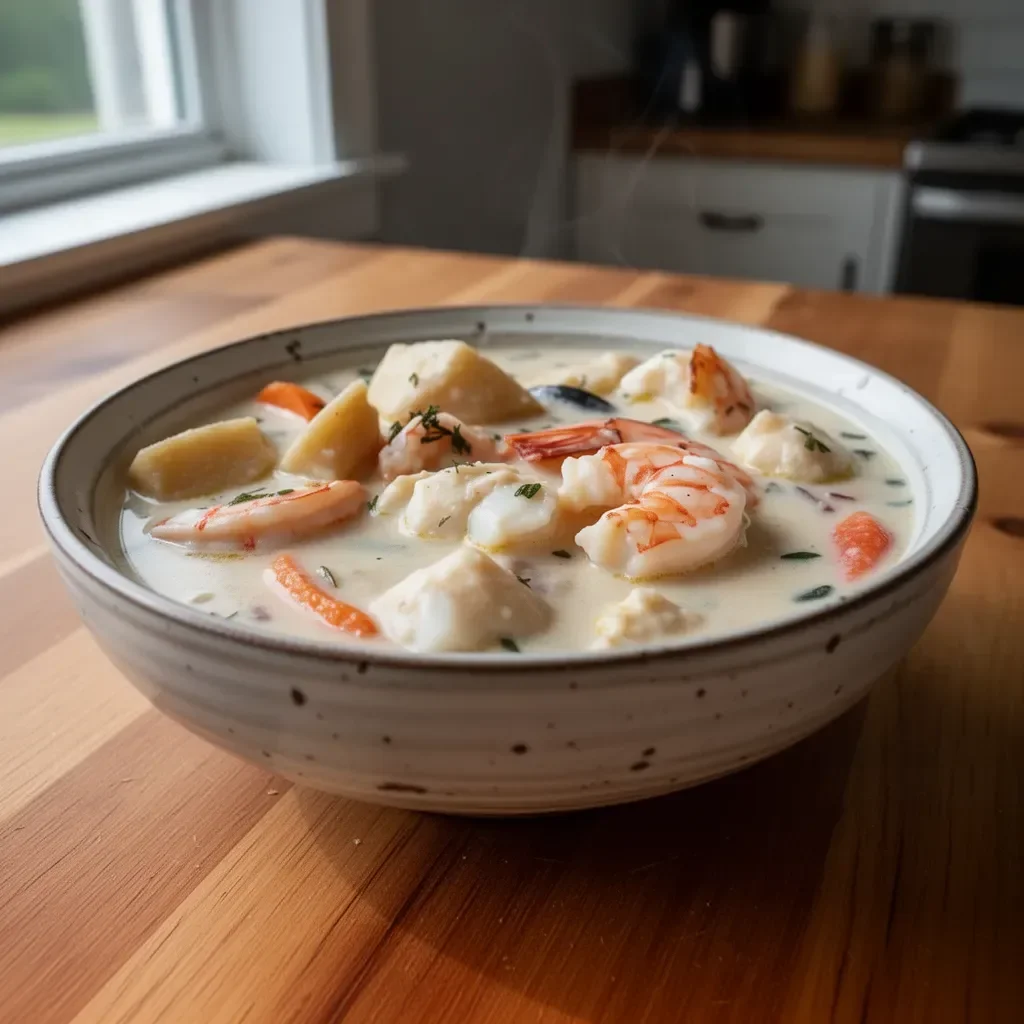
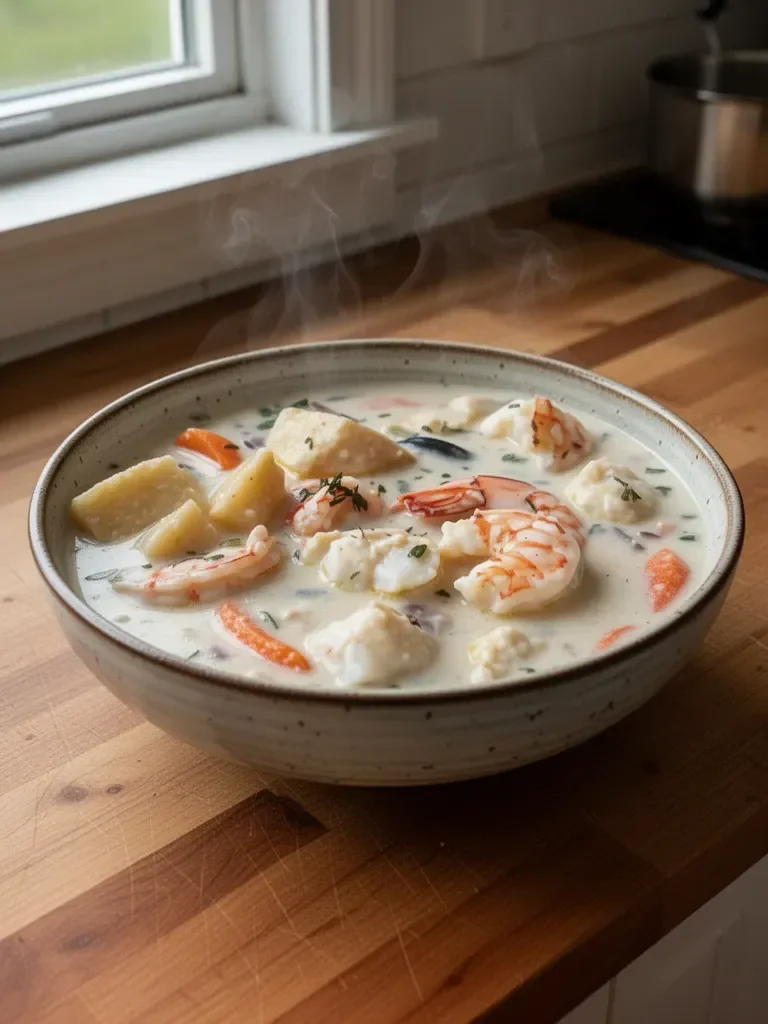
When serving your Nova Scotia seafood chowder, presentation matters. Use wide, shallow bowls to showcase the colorful seafood and vegetables. Garnish with chopped parsley and a spritz of lemon juice right before serving. This final touch enhances both the flavor and appearance, making your dish visually inviting.
Pair your chowder with crusty bread or fresh rolls. These sides complement the dish beautifully, offering a chance to savor every drop of the creamy goodness.
Pairings/Storage
While I can’t suggest anything that pairs with wine, your chowder pairs nicely with crisp green salads or roasted vegetables for a complete meal. Leftovers can be stored in airtight containers in the refrigerator for up to three days.
To maintain freshness, reheat gently on the stovetop over low heat, adding a splash of milk or seafood stock if it thickens too much. For longer storage, consider freezing it for a few weeks — make sure to let it cool completely before transferring to freezer-safe containers.
The delightful experience of warming up with a bowl of Nova Scotia seafood chowder is unmatched. Embrace the flavors of the sea, and enjoy a comforting meal that brings people together at the dinner table.
Print
Nova Scotia Seafood Chowder
- Prep Time: 15 minutes
- Cook Time: 30 minutes
- Total Time: 45 minutes
- Yield: 4 servings
- Category: Main Course
- Method: Simmering
- Cuisine: Canadian
- Diet: Seafood
Description
A rich and creamy seafood chowder filled with fresh fish, shrimp, and scallops, capturing the essence of Nova Scotia.
Ingredients
- ½ lb white fish (haddock, cod, or halibut)
- ½ lb shrimp
- ½ lb scallops
- ½ lb mussels or clams (optional)
- 1 small onion (diced)
- 2 celery stalks (diced)
- 1 medium carrot (diced)
- 2 medium potatoes (peeled & diced)
- 3 cups seafood stock
- 1 cup heavy cream
- 1 cup whole milk
- ½ tsp salt
- ½ tsp black pepper
- ½ tsp thyme
- ½ tsp Old Bay seasoning (optional)
- 2 tbsp butter
- 2 cloves garlic (minced)
- ¼ cup fresh parsley (chopped)
- 1 tbsp lemon juice
Instructions
- Begin by melting the butter in a large pot over medium heat. Add the diced onions, celery, and carrots. Sauté for about 3-4 minutes until they soften.
- Introduce the minced garlic into the mix, cooking for another minute.
- Add the diced potatoes and pour in the seafood stock. Allow to simmer for around 10 minutes.
- Stir in the heavy cream and whole milk gradually, then season with salt, black pepper, thyme, and Old Bay seasoning if desired.
- Add the fish, shrimp, and scallops. If using mussels, toss them in too. Let everything simmer for an additional 5-7 minutes until the seafood is fully cooked.
- Stir in the fresh parsley and lemon juice before serving. Adjust seasoning as necessary.
Notes
Serve warm, optionally garnished with more parsley and a squeeze of lemon. Pair with crusty bread or fresh rolls.