

📑 Table of Contents ▶
Homemade Fresh Pasta
Crafting homemade fresh pasta is a culinary experience like no other. The first time I made pasta from scratch, I felt a sense of accomplishment that is hard to describe. With just a handful of ingredients, the transformation is remarkable. My children gathered around the kitchen, their eyes wide with anticipation as I kneaded the dough. The process became a family tradition, blending creativity with laughter, as we rolled out sheets and shaped them into all kinds of pasta.
The texture of homemade fresh pasta surpasses anything you find in a store. You can taste the freshness in every bite. It serves as the perfect base for a variety of sauces or just a drizzle of quality olive oil. Each time I make it, I unearth a deeper appreciation for the simplicity and joy it brings to our meals. There’s something magical about watching the dough come to life, morphing from flour and eggs into silky ribbons of deliciousness.
Making homemade fresh pasta is not just about the end product; it’s about the journey. From the moment you form that well of flour to the moment you drop it into boiling water, every step is infused with creativity and flavor. So gather your ingredients and embrace the delight that comes with making fresh pasta from scratch. Today, let’s dive into the process and discover how easy it truly is.
Homemade Fresh Pasta
Fundamentals
Homemade fresh pasta relies on a few key ingredients: flour, eggs, olive oil, and salt. The flour you choose impacts the final texture. All-purpose flour or 00 flour works beautifully, delivering a rich and elastic dough. The eggs provide richness and color, enhancing the overall flavor and texture. Olive oil adds a touch of moisture and makes the dough easier to work with, while the salt elevates the taste.
Understanding the importance of each component aids in crafting the perfect pasta. This simplicity makes fresh pasta an accessible dish for both novice and experienced cooks. It invites creativity, allowing you to explore various shapes and sizes, from fettuccine to pappardelle. Homemade fresh pasta doesn’t just serve as a meal; it becomes a canvas for your culinary artistry.
Preparation/setup
To start your homemade fresh pasta journey, ensure you have a clean workspace. This helps maintain hygiene while you work with your ingredients. Lay out your flour, forming a well in the center, creating a cozy spot for the eggs, olive oil, and salt. This method encourages the gradual incorporation of flour into the wet ingredients, making the process smoother.
Have a fork handy, as it’s your best tool for mixing initially. As you combine the ingredients, you’ll see how the flour will start to stick together, creating a dough. As the dough forms, switch to your hands, kneading it until it’s smooth and elastic. Don’t rush this step; kneading plays a crucial role in developing the dough’s gluten, giving it that desirable chewy texture.
Ingredients
- 2 cups all-purpose flour or 00 flour
- 3 extra-large eggs
- 2 tablespoons olive oil
- 1/2 teaspoon salt
Directions
- On a clean surface, place the flour and form a well in the center.
- Add the eggs, olive oil, and salt into the well.
- Use a fork to begin mixing the ingredients, slowly incorporating the flour.
- Once the dough starts to form, knead it by hand for 5 to 10 minutes until it becomes smooth and elastic.
- If the dough is sticky, add a light pinch of flour.
- Form it into a ball, place it in a lightly floured bowl, cover with a lid, and let it rest for 30 minutes.
- After resting, divide the dough into four portions.
- Roll out one portion into a rectangle, checking for sticking, and roll to a thin thickness.
- Fold the rolled dough in layers and cut it to your desired shape, such as wider strips or thinner slices.
- To cook, boil the fresh pasta in a large pot of salted water until they float.
- Serve with olive oil, cheese, or vegetables as desired.
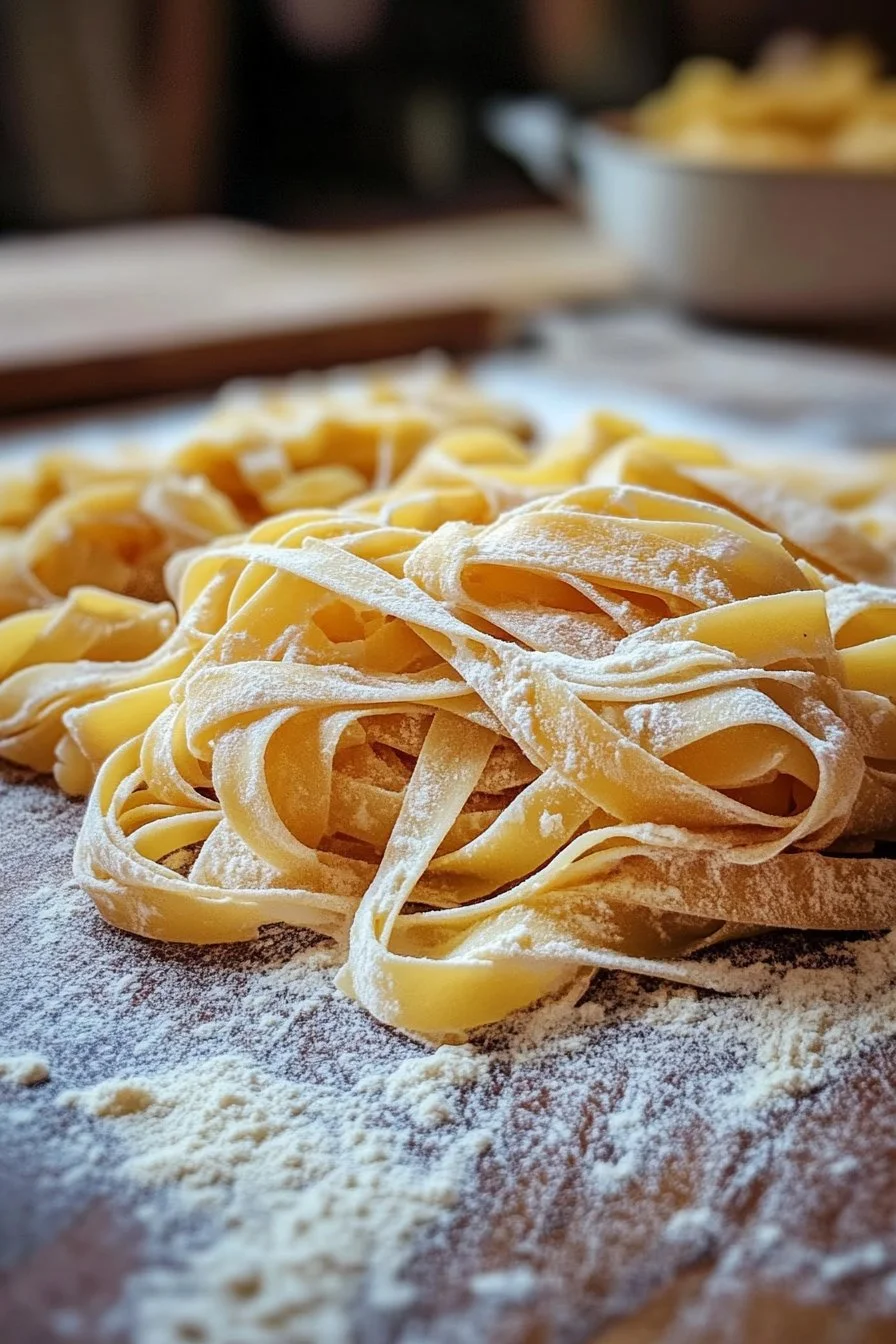
Crafting Perfect Fresh Pasta
Technique
Mastering the technique of rolling and cutting pasta elevates your homemade creation. A rolling pin or a pasta machine can make this task easier. If using a rolling pin, ensure you exert even pressure, applying more weight on the edges to achieve uniform thickness. This guarantees even cooking.
Once you’ve rolled out the dough, folding it lightly before cutting helps you create even shapes. The key is to check for sticking. Dust your work surface and the dough lightly with flour. This technique keeps everything moving smoothly and prevents any frustrating clumps.
Tips/tricks
While making homemade fresh pasta, consider a few tips for best results. Work in a comfortable space, as you may spend some time kneading. If you find the dough too sticky during the kneading phase, don’t hesitate to add a light pinch of flour. You want the dough to be pliable, not too dry or overly moist.
Always let the dough rest after kneading. Resting allows the gluten to relax, making it much more manageable to work with. This crucial step significantly improves the final texture of your pasta.
Perfecting Your Homemade Fresh Pasta
Perfecting results
Preparation and technique lead to remarkable results. Fresh pasta should be silky and slightly elastic after cooking. If you notice it’s too gummy, your cooking time may need adjustment. Check for doneness by tasting. It should have a nice bite, often referred to as "al dente."
Flavor plays a significant role as well. The simplicity of the ingredients allows you to experiment. Try adding herbs or spices to the dough for an infused flavor. This creativity enhances the dish and makes it uniquely yours.
Troubleshooting/variations
Homemade fresh pasta can sometimes yield unexpected results. If your dough doesn’t come together, you may need to assess your ingredient ratios. The balance of dry and wet components is essential. Incorporate additional flour gradually if the dough feels too wet. Conversely, if it’s too dry, add a minute splash of water.
You can also try different shapes for exciting variations. For instance, try slicing into strips for fettuccine or cutting them into small squares for ravioli. These variations keep your meals interesting and allow you to showcase your skills.
Serving Your Creation
Serving/presentation
Homemade fresh pasta deserves an elegant presentation. Keep it simple and let the pasta shine. After cooking, toss it gently with olive oil to keep the strands separate and add a layer of flavor. Plate it beautifully, perhaps with a sprinkle of freshly grated cheese or herbs to accentuate the dish.
For a colorful touch, consider adding roasted vegetables or sautéed greens. This not only enhances the visual appeal but also introduces wholesome nutrients to your meal, making it wholesome and vibrant.
Pairings/storage
Pair fresh pasta with a variety of toppings and sauces, allowing your creativity to shine through. Olive oil, seasonal vegetables, or a simple cheese sauce all complement your pasta beautifully. Consider crafting a fresh herb pesto or a creamy sauce that allows every bite to burst with flavor.
For storage, fresh pasta holds well in the fridge for a day or two. Ensure you dust it lightly with flour, and then store it in an airtight container. If you prefer a longer shelf life, dry the pasta and store it in a cool, dark place.
Conclusion
Homemade fresh pasta brings joy to the dinner table, and its simplicity allows home cooks to create magic in their own kitchens. The process from dough to plate is not just about the food; it’s about the experience shared with family and friends. Each time you embark on this culinary adventure, you craft not only delicious meals but precious memories. Embrace homemade fresh pasta, and enjoy the journey it takes you on.
Print
Homemade Fresh Pasta
- Prep Time: 15 minutes
- Cook Time: 5 minutes
- Total Time: 50 minutes
- Yield: 4 servings
- Category: Pasta
- Method: Boiling
- Cuisine: Italian
- Diet: Vegetarian
Description
Craft your own delicious fresh pasta from scratch with just a few simple ingredients. Experience the joy and creativity of making pasta at home!
Ingredients
- 2 cups all-purpose flour or 00 flour
- 3 extra-large eggs
- 2 tablespoons olive oil
- 1/2 teaspoon salt
Instructions
- On a clean surface, place the flour and form a well in the center.
- Add the eggs, olive oil, and salt into the well.
- Use a fork to begin mixing the ingredients, slowly incorporating the flour.
- Once the dough starts to form, knead it by hand for 5 to 10 minutes until it becomes smooth and elastic.
- If the dough is sticky, add a light pinch of flour.
- Form it into a ball, place it in a lightly floured bowl, cover with a lid, and let it rest for 30 minutes.
- After resting, divide the dough into four portions.
- Roll out one portion into a rectangle, checking for sticking, and roll to a thin thickness.
- Fold the rolled dough in layers and cut it to your desired shape, such as wider strips or thinner slices.
- To cook, boil the fresh pasta in a large pot of salted water until they float.
- Serve with olive oil, cheese, or vegetables as desired.
Notes
For best results, let the dough rest after kneading to improve its texture. Fresh pasta can be paired with various sauces and toppings.