
📑 Table of Contents ▶
- Focaccia Fundamentals
- Understanding Focaccia
- Essential Ingredients
- Preparation and Setup
- Directions to Create Your Focaccia
- Techniques to Master Focaccia
- Perfecting the Bread-making Process
- Tips and Tricks
- Elevating and Troubleshooting Focaccia
- Perfecting Results
- Troubleshooting Variations
- Serving and Storage Suggestions for Focaccia
- Presentation Tips
- Storage Recommendations
Focaccia
Nothing beats the aroma of freshly baked focaccia wafting through the kitchen. This delectable Italian bread brings back memories of family gatherings, where we would gather around the table, breaking apart warm pieces and sharing stories. Focaccia has a special place in my heart, not just for its taste, but for the connections it creates.
One evening, while experimenting with flavors, I stumbled upon a combination that elevated the classic focaccia: the perfect balance of olive oil and rosemary. The crispy exterior, paired with the soft, airy inside, left us wanting more. In that moment, I realized that making focaccia is not just about the ingredients; it’s about the experience and the love infused into every rise and fold.
Every time I prepare focaccia, I find joy in the simplicity of the process. It allows creativity to shine through with toppings or infused oils. Whether enjoyed with a hearty soup or as an appetizer, focaccia’s versatility makes it a go-to recipe in my kitchen. Let’s dive into the world of focaccia and discover how easy it is to create this incredible bread at home.
Focaccia Fundamentals
Understanding Focaccia
Focaccia has roots in ancient Italy. Traditionally, it serves as a flatbread seasoned with oil and herbs. The name “focaccia” comes from the Latin word “focus,” meaning hearth, referencing the way it was originally baked. Today, focaccia is known for its versatility. It can become the base for sandwiches or a side dish for various meals.
Essential Ingredients
To craft focaccia, a handful of ingredients unite to create that delightful flavor profile. You’ll need 1¾ cups of warm water to activate the yeast, along with 2 teaspoons of instant dry yeast and 2 teaspoons of sugar. The star of the show is 4 cups of all-purpose or bread flour, giving the bread its structure. To bring flavor and balance, 3 teaspoons of salt play a crucial role. Extra virgin olive oil adds richness, and a pinch of rosemary can enhance the overall taste.
Preparation and Setup
Begin your focaccia journey by activating the yeast. Combine the warm water, yeast, and sugar in a small bowl. Let it rest for about 30 seconds until the yeast dissolves. In a large bowl, mix the flour and salt. Pour in the yeast mixture and stir with a wooden spoon for around a minute until you have a sticky dough. Adding 2 tablespoons of olive oil into the mixture helps bring everything together.
Directions to Create Your Focaccia
- Once the dough forms, decide on your fermentation method. For a quick rise, cover the bowl with a damp towel and set it in a slightly warm oven for 1.5 to 2 hours until it doubles in size. Alternatively, you can choose a slow fermentation by refrigerating the dough for 8 to 24 hours, then letting it warm at room temperature for 2 to 3 hours.
- After the rise, perform a series of folds, gently folding the dough over itself 20 to 40 times. This strengthens its structure.
- Grease your baking pan with 2 to 3 tablespoons of olive oil and transfer the dough. Spread it out to cover the pan’s base, allowing it to rest for another 45 minutes.
- While waiting, prepare the topping mix by combining 2 tablespoons of olive oil, 3 tablespoons of water, and ½ teaspoon of salt in a bowl.
- Make dimples in the dough with your fingers and drizzle the topping mix over it, allowing the flavors to soak in. Finish with a sprinkle of rosemary and any additional flaky salt according to taste.
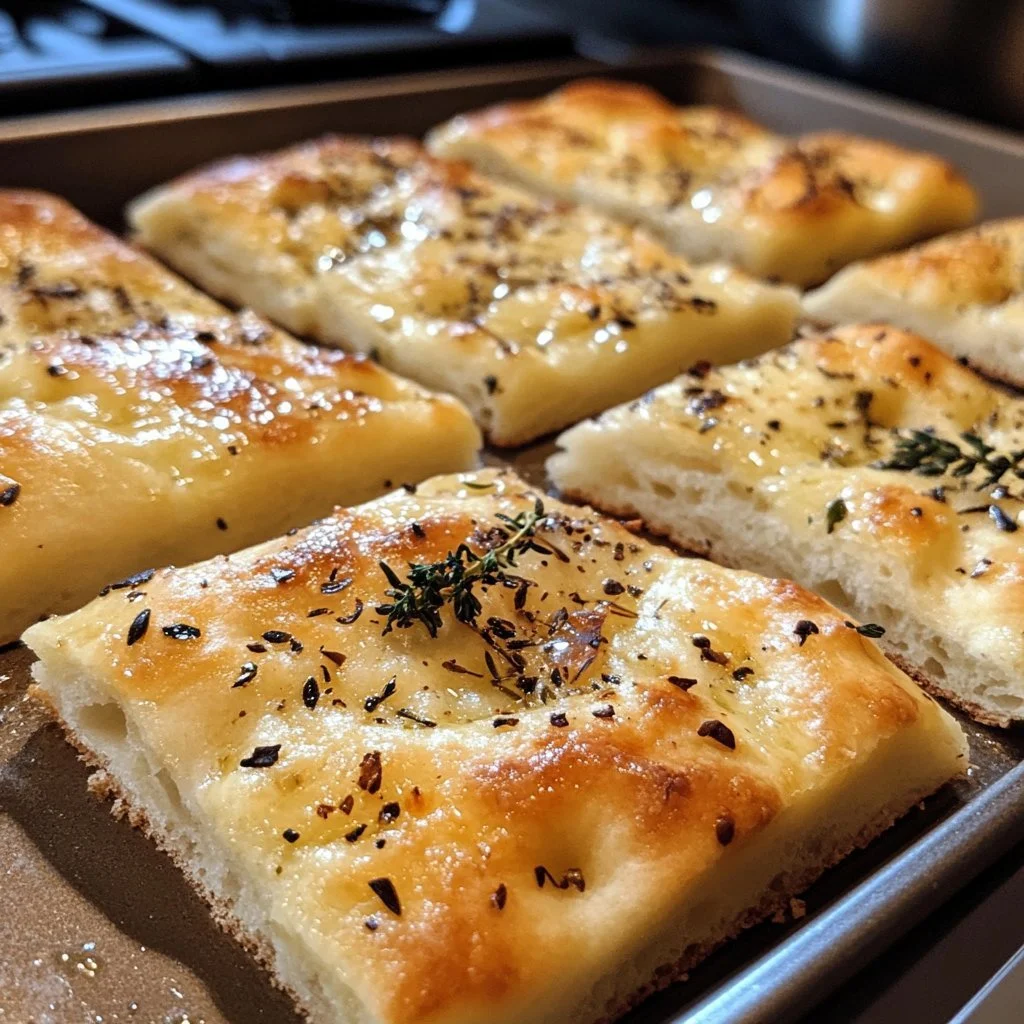
- Preheat the oven to 450°F (230°C), then bake the focaccia for 20 to 25 minutes. Look for that beautiful golden, crispy surface.
- Let it cool for at least 5 minutes before removing from the pan and cutting into pieces.
Techniques to Master Focaccia
Perfecting the Bread-making Process
Focaccia’s texture largely depends on its kneading and fermentation. Ensure that you knead the dough enough to develop gluten for that perfect chewiness. Don’t rush the fermentation process; allowing the bread to rise adequately enriches the flavor and texture, producing a light and airy focaccia.
Tips and Tricks
- Use quality ingredients: The better the olive oil and flour, the tastier the focaccia will be.
- Experiment with toppings: Try various herbs, olives, or sun-dried tomatoes to personalize your focaccia.
- Temperature matters: Ensure your water is warm but not hot, which can kill the yeast. Aim for around 110°F (43°C).
- Time your bake: Keep an eye on the baking focaccia; ovens vary in heat. Look for a golden-brown crust for the best results.
Elevating and Troubleshooting Focaccia
Perfecting Results
Achieving the perfect focaccia takes practice. The dough should be moist and pliable. If it’s too dry, add a little more water. If your focaccia doesn’t rise as expected, make sure the yeast is fresh and that the dough had adequate time to rise.
Troubleshooting Variations
Should your focaccia turn out dense, it may be due to under-kneading or not giving it enough rise time. Adjust your method on your next attempt. Also, consider variations in flour; using bread flour can uphold more structure and give a sturdier result.
Serving and Storage Suggestions for Focaccia
Presentation Tips
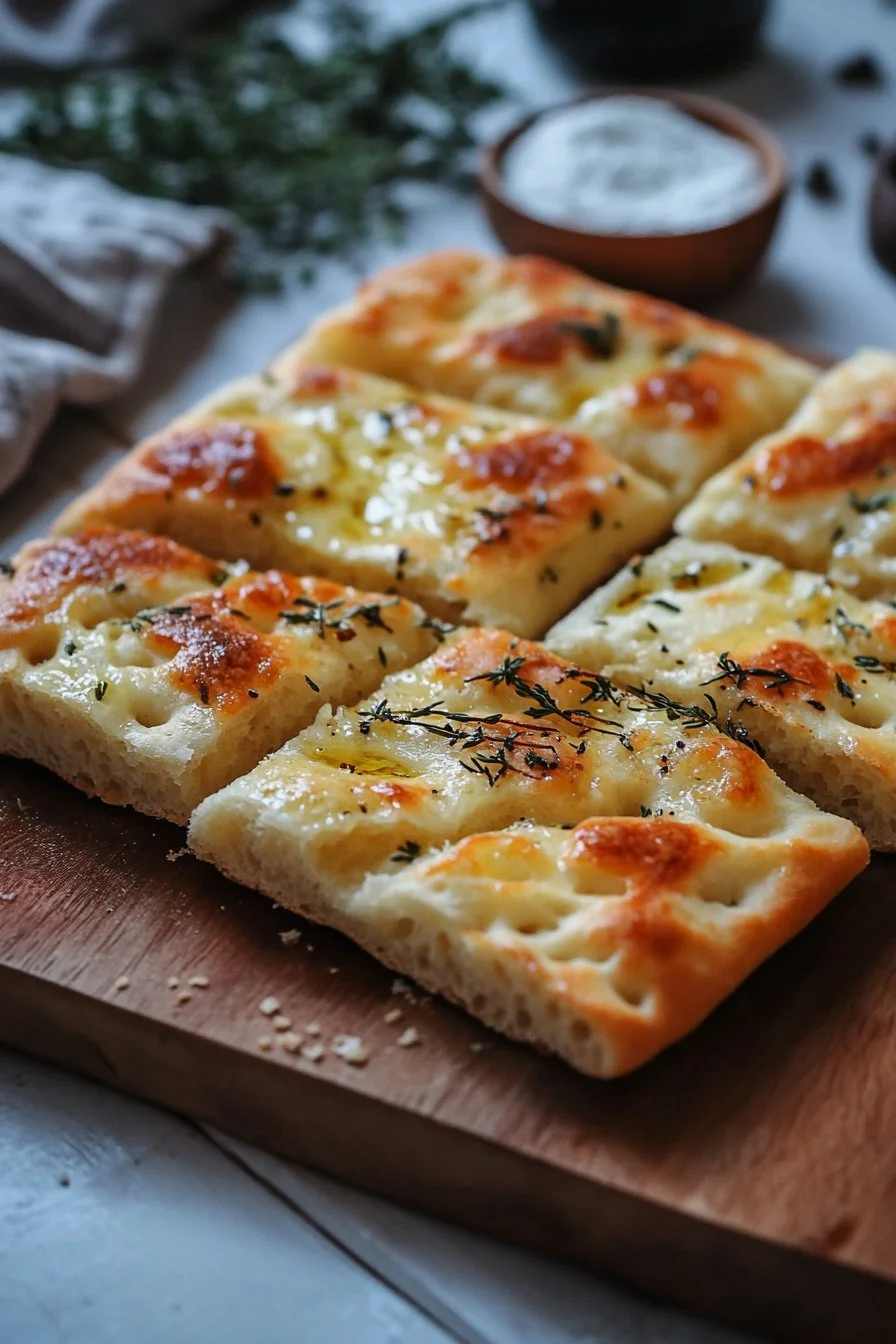
Focaccia shines when it comes to presentation. Slice it into squares or rectangles and serve warm with a drizzle of olive oil, alongside dips like balsamic vinegar or herbs for an enticing starter. You can even stack pieces for a visually appealing arrangement.
Storage Recommendations
Store leftover focaccia in an airtight container at room temperature for up to 2 days. For longer storage, slice it, wrap it tightly in plastic, and freeze it for up to 3 months. Reheat in the oven at a low temperature for freshness before serving.
Focaccia invites creativity and comfort into the kitchen. By understanding the fundamentals and perfecting your craft, the result will always yield a deliciously satisfying bread that fosters connection through shared meals.
Print
Focaccia
- Prep Time: 15 minutes
- Cook Time: 25 minutes
- Total Time: 70 minutes
- Yield: 8 servings
- Category: Breads
- Method: Baking
- Cuisine: Italian
- Diet: Vegetarian
Description
Delicious homemade Italian focaccia with a crispy exterior and soft, airy inside, perfect for sharing.
Ingredients
- 1¾ cups warm water
- 2 teaspoons instant dry yeast
- 2 teaspoons sugar
- 4 cups all-purpose flour
- 3 teaspoons salt
- 2 tablespoons extra virgin olive oil (plus more for greasing)
- Pinch of rosemary
- 2 tablespoons olive oil (for topping mix)
- 3 tablespoons water (for topping mix)
- ½ teaspoon salt (for topping mix)
Instructions
- In a small bowl, combine warm water, yeast, and sugar. Let it rest for about 30 seconds until the yeast dissolves.
- In a large bowl, mix flour and salt. Pour in the yeast mixture and stir with a wooden spoon until you have a sticky dough.
- Add 2 tablespoons of olive oil into the mixture and mix well.
- Cover the bowl with a damp towel and let it rise in a warm oven for 1.5 to 2 hours, or refrigerate for slow fermentation for 8 to 24 hours.
- After the rise, fold the dough gently 20 to 40 times to strengthen its structure.
- Grease your baking pan with 2 to 3 tablespoons of olive oil and transfer the dough into it, spreading it out to cover the base.
- Let the dough rest for another 45 minutes.
- Prepare the topping mix by combining 2 tablespoons of olive oil, 3 tablespoons of water, and ½ teaspoon of salt.
- Make dimples in the dough with your fingers and drizzle the topping mix over it. Sprinkle with rosemary and flaky salt as desired.
- Preheat the oven to 450°F (230°C) and bake for 20 to 25 minutes until golden brown.
- Let it cool for at least 5 minutes before removing from the pan and cutting into pieces.
Notes
Use quality ingredients for better flavor and experiment with various toppings to personalize your focaccia.