
📑 Table of Contents ▶
Asparagus Pasta
As a busy, health-conscious mom, finding quick and delicious meals is a top priority. One evening, as I rummaged through my fridge, I found a pound of asparagus staring back at me. Suddenly, a delightful idea struck: I could create a fresh, flavorful asparagus pasta. This dish combines the vibrant taste of asparagus with the comforting heartiness of long pasta, making it a perfect weeknight dinner option.
Asparagus pasta quickly became a family favorite. The tender asparagus, sautéed garlic, and fresh lemon create a symphony of flavors that dance on the palate. Best of all, this recipe takes just about 30 minutes to prepare, making it the ideal choice for busy nights when I want to whip up something nutritious and satisfying without much fuss.
Incorporating asparagus into pasta dishes not only enhances the visual appeal but also packs a nutritional punch. This green veggie is loaded with vitamins, minerals, and antioxidants. Coupled with the rich notes of Parmesan cheese, this dish elevates a simple dinner into a gourmet experience that everyone will love. Let’s dive into the details of preparing this delicious asparagus pasta!
Asparagus Pasta Basics
Fundamentals
The fundamental aspects of preparing asparagus pasta revolve around choosing the freshest ingredients and understanding the cooking techniques. Start with tender, thin asparagus, as it cooks faster and offers a lovely texture. The asparagus adds not just flavor but also a pop of color to your dish.
Lemon zest and juice play a crucial role in brightening the flavors. It contrasts beautifully with the rich notes of Parmesan cheese. Selecting high-quality olive oil is also key; it enhances the flavors of the dish. Pay attention to the garlic, which adds aromatic depth. This combination creates a bright, comforting, and utterly delicious meal that comes together quickly.
Preparation/Setup
For this recipe, prep work is essential. Begin by bringing a large pot of salted water to a boil. Salted water is crucial here; it helps to season the pasta as it cooks and enhances the overall flavor. While you wait for the water to boil, it’s time to prepare the asparagus. Trim the asparagus by cutting it diagonally into bite-sized pieces, ensuring they will cook evenly.
Minced garlic adds a fragrant base to the sauté. For the lemon, zest it to obtain about a tablespoon of zest, then juice it until you have three tablespoons of juice. Having everything prepped and ready will streamline the cooking process and keep your kitchen organized.
Ingredients
To create a velvety and flavorful asparagus pasta, gather the following ingredients:
- 1 pound asparagus, preferably thin
- 4 cloves garlic
- 1 medium lemon
- 1 ounce Parmesan cheese (about 1/2 cup freshly grated)
- 1 pound dried spaghetti or other long pasta options
- 4 tablespoons olive oil, divided
- 1 1/2 teaspoons kosher salt, divided
- 1/4 teaspoon freshly ground black pepper
- 1/4 teaspoon red pepper flakes (optional)
- Fresh basil leaves for garnish (optional)
Directions
Now, let’s prepare the asparagus pasta step by step:
- Bring a large pot of salted water to a boil.
- Trim the asparagus by cutting it diagonally into bite-sized pieces.
- Mince the garlic.
- Zest the lemon to obtain about 1 tablespoon of zest, and juice it until you have 3 tablespoons of juice.
- Grate the Parmesan cheese finely.
- Add the dried pasta to the boiling water and cook for about 9 minutes, or 1 minute less than al dente, according to package instructions.
- Meanwhile, heat 3 tablespoons of olive oil in a large skillet over medium heat.
- Add the asparagus, 1 teaspoon kosher salt, black pepper, and red pepper flakes. Sauté until the asparagus is bright green and crisp-tender.
- Stir in the garlic and sauté until fragrant. Remove from heat and mix in the lemon zest and juice.
- Reserve 1 cup of pasta water, then drain the pasta.
- Return the skillet to medium heat and add the drained pasta, remaining salt, and reserved pasta water. Toss until the pasta is al dente and most of the water is absorbed.
- Remove from heat, fold in the Parmesan cheese and remaining olive oil. Toss to combine.
- Serve with additional grated Parmesan and torn fresh basil leaves.
Cooking Techniques for Asparagus Pasta
Technique
When it comes to cooking asparagus pasta, timing is everything. The methods employed in cooking each ingredient ensure that the dish’s textures and flavors shine. Start by cooking the pasta in salted boiling water, as this infuses the noodles with flavor. The pasta should be slightly undercooked since it will continue to cook when you sauté it with the asparagus.
Sautéing the asparagus in olive oil over medium heat allows it to become bright green and crisp-tender. This technique keeps the asparagus vibrant, rather than overly soft. Once you add garlic, quick sautéing will bring out its aromatic qualities without burning it. Combining these techniques produces a dish that boasts a range of delightful textures.
Tips and Tricks
For a fantastic asparagus pasta, keep these tips in mind:
- Choose Thin Asparagus: Opt for thin stalks for quick cooking and a tender bite.
- Reserve Pasta Water: Always save some pasta water; it helps to create a silky sauce when mixed with cheese.
- Fresh Ingredients: Using fresh garlic, lemon, and high-quality olive oil makes a noticeable difference in flavor.
- Customize Heat: If you like a bit of spice, the red pepper flakes add heat without overpowering the dish.
Adhering to these tips ensures that your asparagus pasta will turn out perfectly every time.
Elevating Your Asparagus Pasta
Perfecting Results
Achieving the perfect asparagus pasta involves a few important steps. Pay close attention when sautéing the garlic; cook it just until fragrant or it may become bitter. You want this dish to highlight the fresh flavors, and timing is key.
Adjust the amount of lemon juice according to your taste. If you prefer a more pronounced citrus flavor, feel free to add a bit more. The pasta should seamlessly incorporate the flavors from the garlic, asparagus, and lemon—achieving that is all about tossing everything together thoroughly with reserved pasta water.
Troubleshooting and Variations
Here are some common issues you may encounter and how to address them:
- Pasta Too Sticky: If the pasta becomes sticky after cooking, ensure you toss it well in the reserved pasta water, which adds moisture and helps separate the noodles.
- Asparagus Overcooked: If the asparagus loses its brightness and crunch, try adjusting the cooking time. Remember, it should be sautéed only until bright green and tender.
- Flavor Not Strong Enough: Taste and adjust as you cook. Adding more salt, pepper, or lemon juice can elevate the overall flavor.
Feel free to experiment! Consider adding other vegetables like cherry tomatoes, or even proteins such as shrimp or chicken for variety.
Serving and Storage for Asparagus Pasta
Serving and Presentation
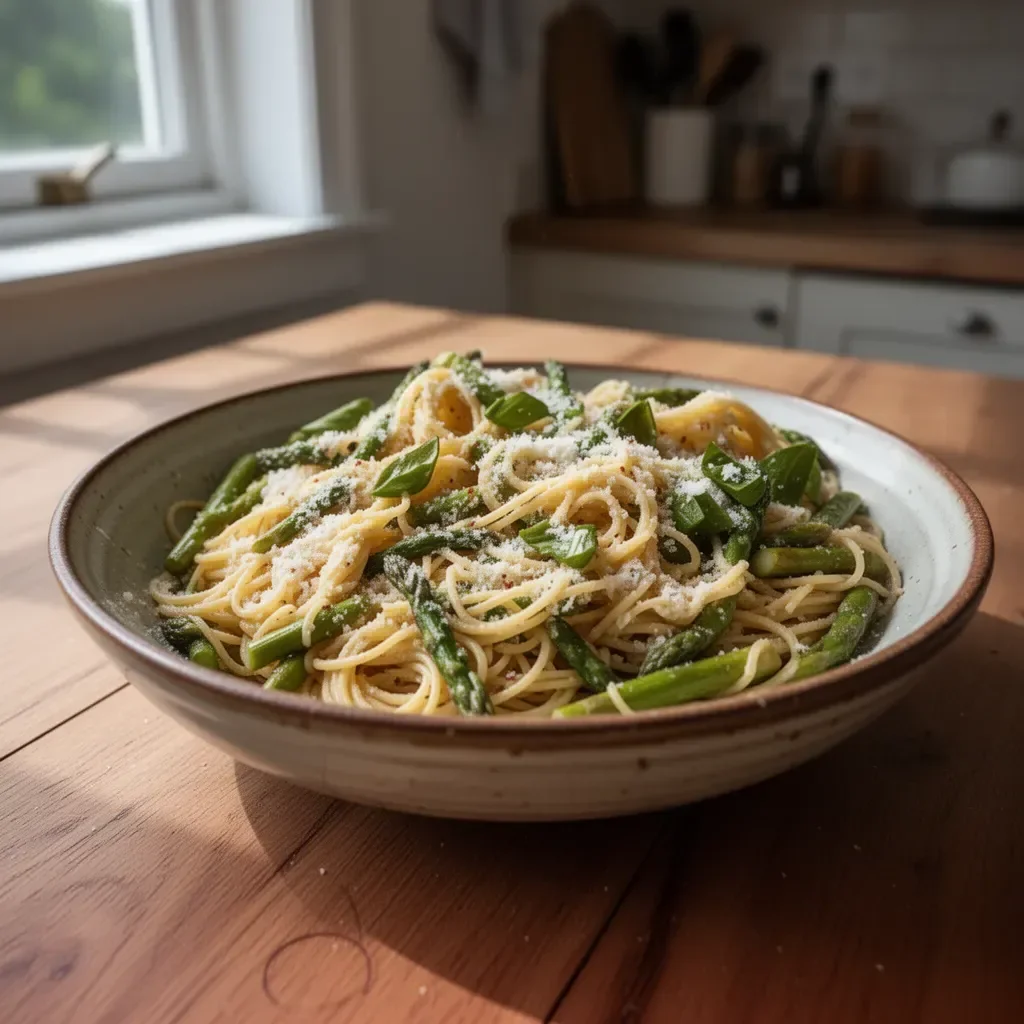
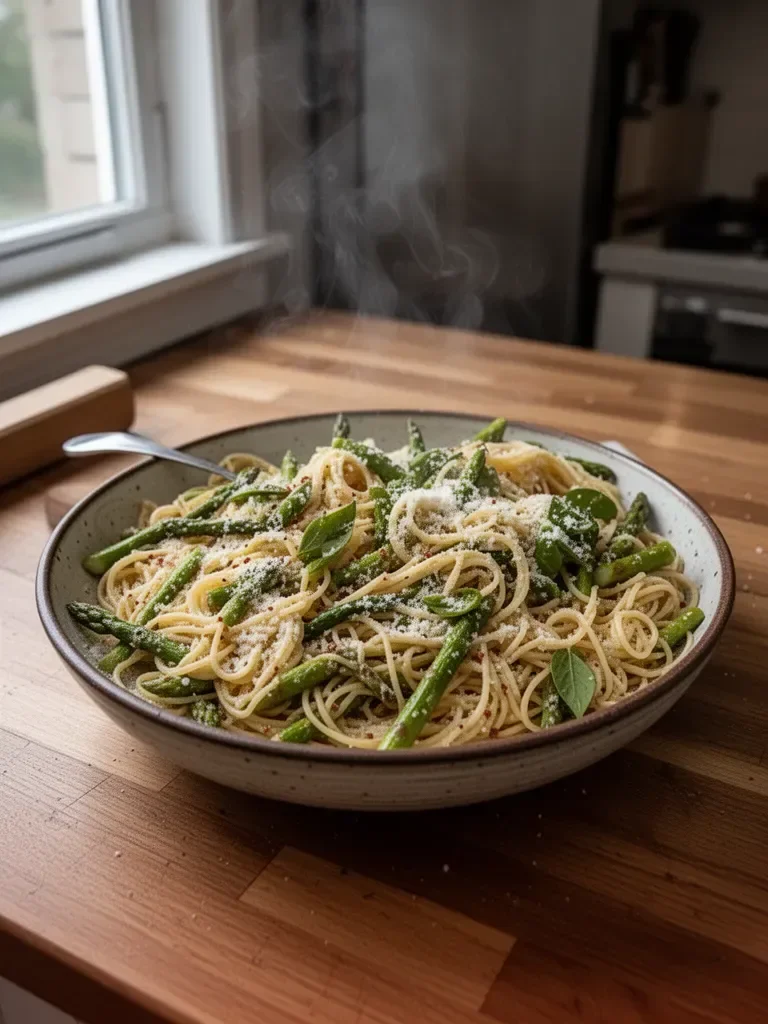
When serving asparagus pasta, presentation plays a key role in enhancing the dining experience. Place the pasta neatly in bowls, and finish with a generous sprinkle of freshly grated Parmesan cheese. For a pop of color and freshness, garnish with torn basil leaves. Drizzle a tiny bit of extra virgin olive oil on top for a lovely gloss.
Serving this dish on colorful plates can brighten up your dinner table. Don’t forget to include a side salad or some crusty bread to round out the meal beautifully.
Pairings and Storage
Asparagus pasta pairs wonderfully with light, crisp salads or steamed vegetables. Serve some garlic bread or a simple bruschetta for a complete meal experience. For dessert, consider something light and refreshing to end your dinner on a high note.
When storing leftovers, place the pasta in airtight containers and refrigerate. It should stay fresh for up to 3 days. Reheat on the stove, adding a splash of olive oil or reserved pasta water to bring it back to life. Enjoy this simple yet delicious dish any time of the week!
Asparagus pasta stands as a quick, flavorful dish perfect for any occasion, highlighting the beauty and versatility of asparagus in a delightful way.
Print
Asparagus Pasta
- Prep Time: 15 minutes
- Cook Time: 30 minutes
- Total Time: 45 minutes
- Yield: 4 servings
- Category: Main Course
- Method: Sautéing
- Cuisine: Italian
- Diet: Vegetarian
Description
A fresh and flavorful asparagus pasta dish that combines tender asparagus, sautéed garlic, and bright lemon for a quick and delicious weeknight dinner.
Ingredients
- 1 pound asparagus, preferably thin
- 4 cloves garlic
- 1 medium lemon
- 1 ounce Parmesan cheese (about 1/2 cup freshly grated)
- 1 pound dried spaghetti or other long pasta options
- 4 tablespoons olive oil, divided
- 1 1/2 teaspoons kosher salt, divided
- 1/4 teaspoon freshly ground black pepper
- 1/4 teaspoon red pepper flakes (optional)
- Fresh basil leaves for garnish (optional)
Instructions
- Bring a large pot of salted water to a boil.
- Trim the asparagus by cutting it diagonally into bite-sized pieces.
- Mince the garlic.
- Zest the lemon to obtain about 1 tablespoon of zest, and juice it until you have 3 tablespoons of juice.
- Grate the Parmesan cheese finely.
- Add the dried pasta to the boiling water and cook for about 9 minutes, or 1 minute less than al dente, according to package instructions.
- Meanwhile, heat 3 tablespoons of olive oil in a large skillet over medium heat.
- Add the asparagus, 1 teaspoon kosher salt, black pepper, and red pepper flakes. Sauté until the asparagus is bright green and crisp-tender.
- Stir in the garlic and sauté until fragrant. Remove from heat and mix in the lemon zest and juice.
- Reserve 1 cup of pasta water, then drain the pasta.
- Return the skillet to medium heat and add the drained pasta, remaining salt, and reserved pasta water. Toss until the pasta is al dente and most of the water is absorbed.
- Remove from heat, fold in the Parmesan cheese and remaining olive oil. Toss to combine.
- Serve with additional grated Parmesan and torn fresh basil leaves.
Notes
For added flavor, consider incorporating other vegetables like cherry tomatoes or proteins like shrimp or chicken. Store leftovers in airtight containers for up to 3 days.