
📑 Table of Contents ▶
- The Basics of Ahi Tuna Marinade
- Fundamentals
- Preparation/setup
- Directions
- Techniques for Success with Ahi Tuna Marinade
- Technique
- Tips and Tricks
- Perfecting Your Ahi Tuna Dish
- Perfecting Results
- Troubleshooting and Variations
- Presenting Your Ahi Tuna Masterpiece
- Serving and Presentation
- Pairings and Storage
- Conclusion
- Ahi Tuna Marinade
Ahi Tuna Marinade Recipe
Creating the perfect marinade can truly elevate a dish. Ahi tuna, known for its delicate flavor and meaty texture, pairs beautifully with bold, vibrant flavors. When marinated well, it becomes not just a meal, but an experience. Oftentimes, I find myself craving seafood that’s both light and satisfying, making this ahi tuna marinade a go-to not just for me but for any health-conscious food lover.
The combination of low-sodium soy sauce, ginger, and gochujang brings a wonderful imbalance between umami and spice, making the ahi tuna shine. Preparing this dish transforms a simple piece of fish into a culinary masterpiece, perfect for impressing friends or enjoying a casual weeknight dinner. Plus, it’s quick and easy, ensuring that a delicious meal is never too far away.
Each bite features succulent, seared tuna infused with fragrant spices and an irresistible glaze. This ahi tuna marinade recipe captures that essence, providing an enjoyable cooking experience that results in a dish everyone will love. Let’s dive in and explore how to make this delightful marinade that brings robust flavors to your table.
The Basics of Ahi Tuna Marinade
Fundamentals
Marinades serve multiple purposes in cooking. They help tenderize food, infuse flavor, and enhance the overall dining experience. For ahi tuna, a concise marinade reflects its natural flavors while adding irresistible depth. The key is balancing acidic ingredients with sweet and salty notes. This harmony creates a beautiful crust when you sear the tuna, making each bite burst with flavor.
The backbone of our ahi tuna marinade is the soy sauce. Low-sodium soy sauce enhances the taste without overpowering the fish. Fresh ginger delivers a zesty kick, while garlic adds a savory depth. Most notably, gochujang gives the marinade an alluring heat that complements the tuna perfectly. Together, these ingredients form a marinade that embodies the essence of Asian fusion cooking.
Preparation/setup
To begin your culinary adventure, ensure you have all your ingredients on hand. Having everything prepped and measured streamlines the process and ensures a smooth cooking experience. First, pat your ahi tuna steaks dry to ensure they absorb the marinade effectively. While the tuna sits, take a shallow dish and combine the marinating ingredients.
Whisk together the soy sauce, sesame oil, rice vinegar, grated ginger, minced garlic, and gochujang. This vibrant mixture envelopes the tuna in rich flavors and sets the stage for the cooking method ahead. Once combined, marinate the tuna for 15 to 20 minutes, allowing it to absorb all those delectable notes. Remember to turn the tuna occasionally to ensure an even coating.
Ingredients
To create your delicious ahi tuna marinade, gather the following ingredients:
- 2 ahi tuna steaks (approx. 12-14 oz total)
- 2 tablespoons low-sodium soy sauce (or gluten-free tamari for a gluten-free option)
- 1 tablespoon fresh grated ginger
- 2 cloves fresh minced garlic
- 2 tablespoons gochujang (Korean chili paste)
- 2 tablespoons honey (or maple syrup for a vegan alternative)
- 1 tablespoon rice vinegar
- 1 tablespoon toasted sesame oil
- 1 teaspoon cornstarch mixed with 1 tablespoon cold water (for thickening)
- 1 tablespoon neutral oil (canola or grapeseed)
- Toasted sesame seeds and sliced green onion (for garnish)
Directions
- Pat the tuna steaks completely dry.
- In a shallow dish, whisk together the soy sauce, sesame oil, rice vinegar, ginger, garlic, and gochujang.
- Marinate the tuna for 15-20 minutes at room temperature, turning occasionally to ensure even coating.
- While the tuna marinates, combine the remaining sesame oil, rice vinegar, ginger, garlic, gochujang, and honey in a small saucepan. Bring to a simmer over medium heat.
- In a separate bowl, whisk the cornstarch and cold water to create a slurry. Add this mixture to the saucepan and stir constantly until the sauce thickens, about 1-2 minutes. Set aside.
- Remove the tuna from the marinade and pat dry again.
- Heat the neutral oil in a heavy-bottomed pan over high heat until shimmering or smoking.
- Sear the tuna steaks for 60-90 seconds per side, achieving a lovely crust while keeping the inside rare to medium-rare.
- Let the seared tuna rest for 2 minutes on a cutting board. Slice the tuna against the grain into 1 cm pieces.
- Arrange the tuna on plates, drizzle with the warm glaze, and garnish with toasted sesame seeds and sliced green onions.
Techniques for Success with Ahi Tuna Marinade
Technique
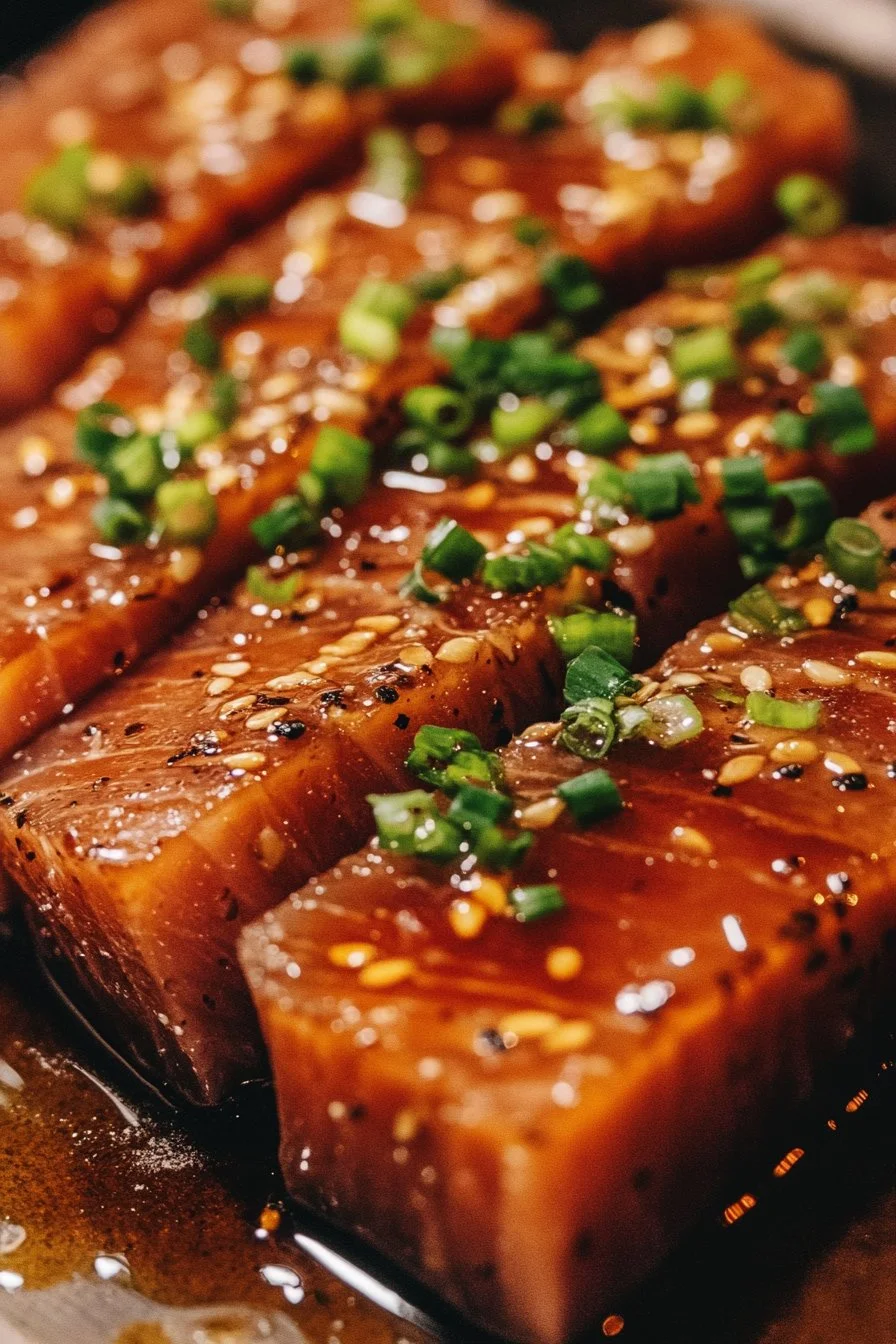
The cooking technique used to prepare the ahi tuna after marination plays a crucial role in achieving the perfect sear. Searing the tuna over high heat creates a caramelized crust that seals in the juices while maintaining a tender interior. This method works exceptionally well for fish like ahi tuna, which cooks quickly. Avoid overcrowding the pan; sear one or two steaks at a time to ensure even cooking.
In addition, timing is essential. Aim for 60-90 seconds per side. Searing for too long will overcook the fish, leading to a dry texture. Instead, the goal is to achieve a translucent center that allows the natural flavors to shine through.
Tips and Tricks
To enhance your experience, keep a few tips in mind. When selecting your ahi tuna, look for fresh steaks with bright color and a firm texture. Frozen tuna steaks can also work; just be sure to thaw them in the refrigerator overnight for the best results.
Don’t hesitate to experiment with ingredients in the marinade. If you enjoy experimenting with flavors, consider adding a splash of citrus or swapping the honey for another sweetener. Customizing the marinade allows you to create a dish tailored to your taste preferences.
Perfecting Your Ahi Tuna Dish
Perfecting Results
To achieve restaurant-quality ahi tuna, pay attention to your cooking temperature. Use a heavy-bottomed skillet or cast-iron pan for optimal heat retention. This ensures an even sear that yields a delightful crust. Additionally, using a meat thermometer can help monitor the internal temperature, guiding you to the desired doneness.
Resting the tuna after cooking is essential. This allows the juices to redistribute throughout the meat, enhancing flavor and moisture. Remember to slice against the grain for the best texture. Cutting in this manner makes each piece tender and easy to chew.
Troubleshooting and Variations
It’s important to troubleshoot common pitfalls in cooking ahi tuna. If the fish becomes tough, it likely overcooked. Monitor your cooking time closely and adjust as needed. If the marinade tastes too salty, consider balancing it with more honey or sweet alternative.
For variations, try incorporating different spice blends or herbs in the marinade. Substituting miso paste for gochujang could provide a unique take on this dish. Such adaptability ensures that your ahi tuna stays exciting every time you make it.
Presenting Your Ahi Tuna Masterpiece
Serving and Presentation
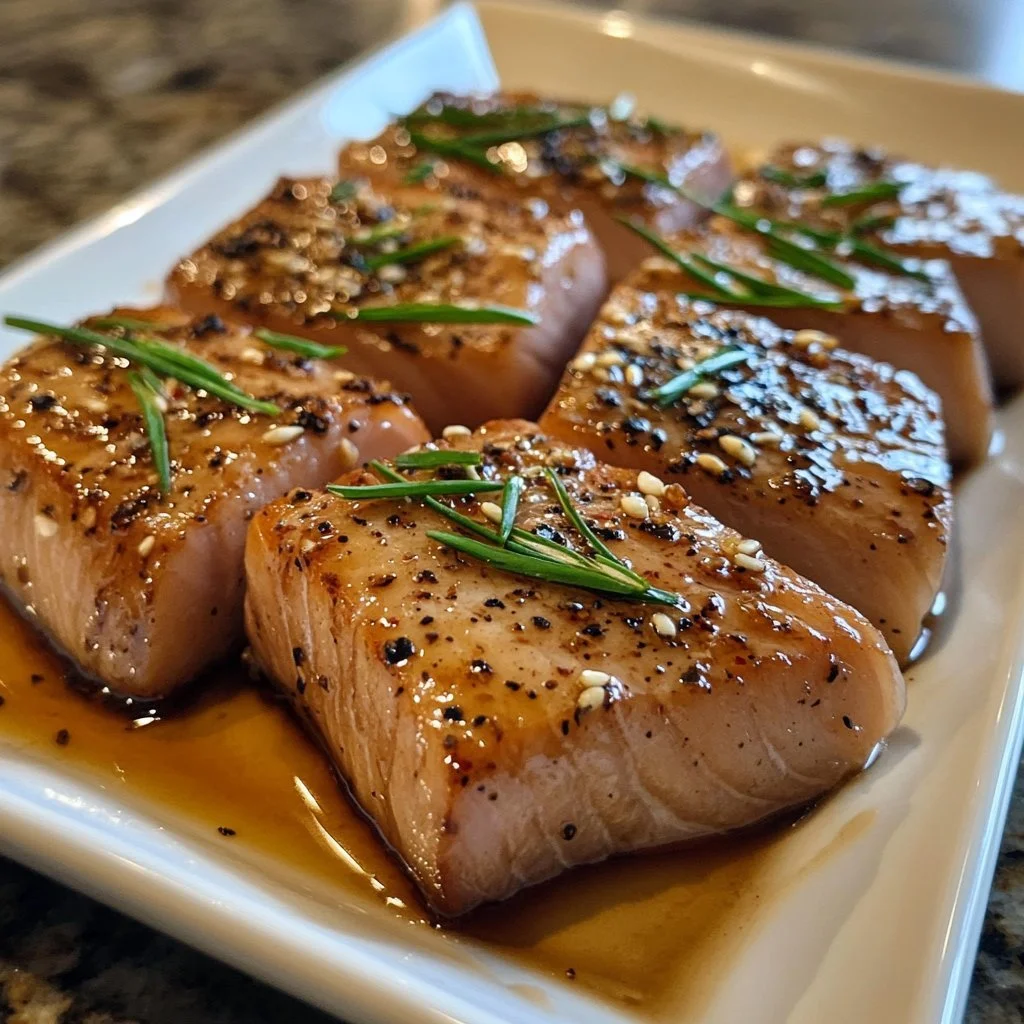
Presenting your dish artfully adds an extra layer of enjoyment. Arrange the sliced tuna on a nice plate and drizzle the warm glaze generously over the top. Garnish with toasted sesame seeds and sliced green onion for visual appeal and a hint of freshness.
Serve alongside light accompaniments such as a salad, steamed veggies, or a bed of rice. Light dishes provide a perfect contrast to the rich flavors of the tuna, enhancing your dining experience.
Pairings and Storage
While traditional pairings often suggest heavy accompaniments, consider fresh, vibrant options. Cucumber salad or a citrus-based slaw complements the tuna beautifully. For storage, keep leftovers in an airtight container in the refrigerator for up to two days. Enjoy cold, or quickly reheat in a pan, ensuring you maintain the tenderness of the fish.
Storing the glaze separately keeps it fresh and vibrant, allowing you to drizzle it over the tuna just before serving. These approaches ensure your meal remains delightful, even days later.
Conclusion
A well-crafted ahi tuna marinade offers a symphony of flavors that transforms a simple meal into an unforgettable experience. The marinade’s unique blend of spices, sweet notes, and a bit of heat creates a perfect balance for searing tender tuna. With easy steps to follow, anyone can become an expert at preparing this dish at home.
Every bite of marinated tuna brings layers of flavor, inviting the diner to savor each moment. Whether for a cozy dinner or an impressive gathering, this ahi tuna marinade recipe guarantees success. Experience the joy of cooking your own unique version, and let the flavors shine on your dinner table!
Print
Ahi Tuna Marinade
- Prep Time: 15 minutes
- Cook Time: 5 minutes
- Total Time: 20 minutes
- Yield: 2 servings
- Category: Main Course
- Method: Searing
- Cuisine: Asian
- Diet: Paleo
Description
Elevate your ahi tuna with this flavorful marinade featuring soy sauce, ginger, and gochujang for an unforgettable culinary experience.
Ingredients
- 2 ahi tuna steaks (approx. 12-14 oz total)
- 2 tablespoons low-sodium soy sauce (or gluten-free tamari)
- 1 tablespoon fresh grated ginger
- 2 cloves fresh minced garlic
- 2 tablespoons gochujang (Korean chili paste)
- 2 tablespoons honey (or maple syrup for a vegan alternative)
- 1 tablespoon rice vinegar
- 1 tablespoon toasted sesame oil
- 1 teaspoon cornstarch mixed with 1 tablespoon cold water (for thickening)
- 1 tablespoon neutral oil (canola or grapeseed)
- Toasted sesame seeds and sliced green onion (for garnish)
Instructions
- Pat the tuna steaks completely dry.
- In a shallow dish, whisk together the soy sauce, sesame oil, rice vinegar, ginger, garlic, and gochujang.
- Marinate the tuna for 15-20 minutes at room temperature, turning occasionally to ensure even coating.
- While the tuna marinates, combine the remaining sesame oil, rice vinegar, ginger, garlic, gochujang, and honey in a small saucepan. Bring to a simmer over medium heat.
- In a separate bowl, whisk the cornstarch and cold water to create a slurry. Add this mixture to the saucepan and stir constantly until the sauce thickens, about 1-2 minutes. Set aside.
- Remove the tuna from the marinade and pat dry again.
- Heat the neutral oil in a heavy-bottomed pan over high heat until shimmering or smoking.
- Sear the tuna steaks for 60-90 seconds per side, achieving a lovely crust while keeping the inside rare to medium-rare.
- Let the seared tuna rest for 2 minutes on a cutting board. Slice the tuna against the grain into 1 cm pieces.
- Arrange the tuna on plates, drizzle with the warm glaze, and garnish with toasted sesame seeds and sliced green onions.
Notes
For best results, use a heavy-bottomed skillet and monitor cooking time closely to avoid overcooking the tuna.