
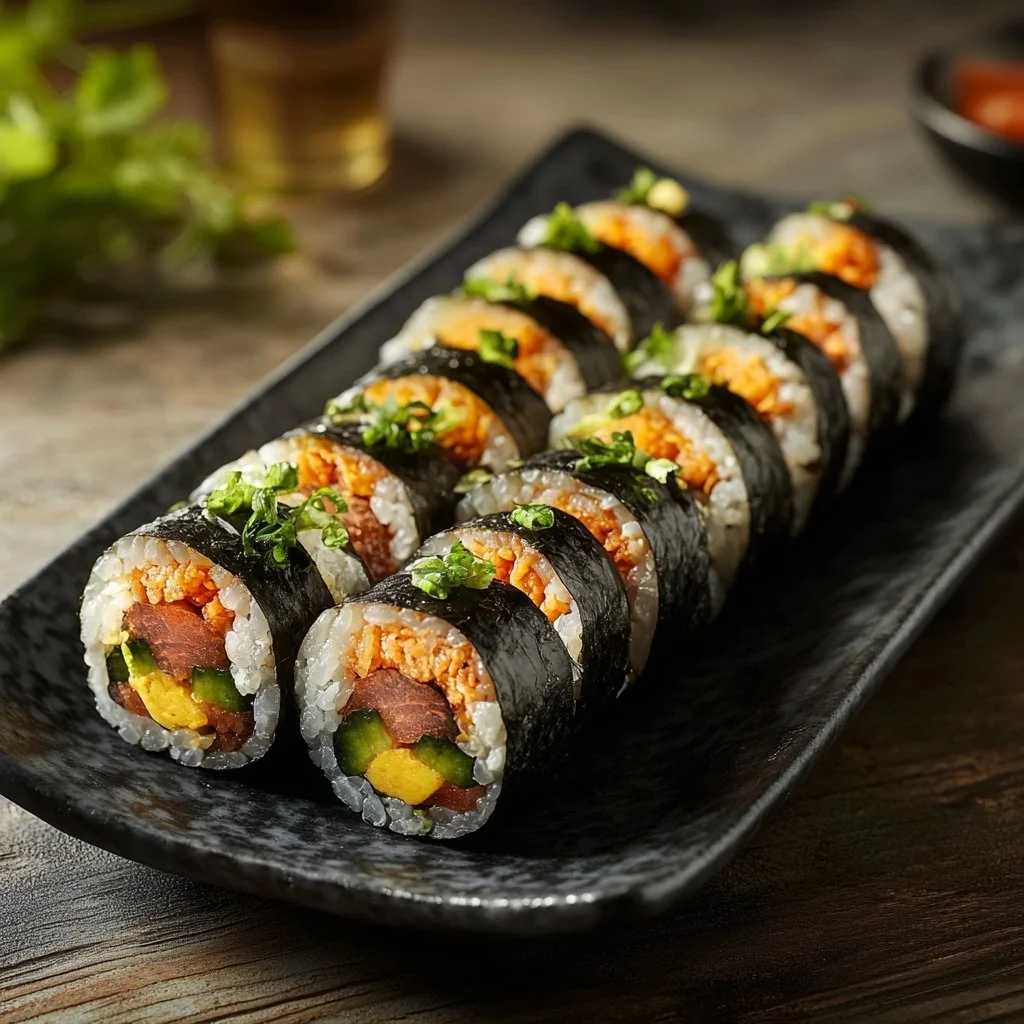
📑 Table of Contents ▶
Spicy Tuna Rice Rolls
Creating easy yet delicious meals can feel like a challenge, especially when juggling a busy lifestyle. Spicy tuna rice rolls bring a world of flavor to the table, making it simple to prepare something delightful without spending hours in the kitchen. The combination of fresh vegetables, spicy tuna, and the tangy kick of gochujang makes this dish not only healthy but also satisfying.
As a mom who appreciates quick meals, I have fallen in love with these spicy tuna rice rolls. They allow me to enjoy vibrant flavors while remaining nutritious. Each ingredient plays a vital role in enhancing the overall experience, from the crunchy texture of the cucumber to the savory notes of perilla leaves. These rolls truly embody the spirit of easy, flavorful cooking that everyone can appreciate.
The beauty of spicy tuna rice rolls lies in their versatility. You can adapt them according to personal preferences, ensuring that everyone at the table can delight in their unique combination of flavors. The steps are straightforward, making them perfect for a family cooking project or a quick weeknight meal. Each bite delivers freshness and excitement, fulfilling those cravings with a healthy twist.
Spicy Tuna Rice Rolls: Fundamentals
Preparation/setup
To create the perfect spicy tuna rice rolls, start by gathering the essential ingredients. You need 2 cups of cooked short-grain rice, 4 sheets of seaweed (nori), 1 can of drained tuna, 2 tablespoons of mayonnaise, and 1 tablespoon of gochujang. Don’t forget the 4-6 perilla leaves or lettuce as a substitute, 1 julienned carrot, and 1 julienned cucumber. Finally, you’ll want some sesame oil and salt.
Before beginning, it’s essential to have your workspace organized. Lay down a bamboo mat, which helps facilitate rolling the rice and filling tightly and evenly. This mat ensures a neat sushi roll that holds together beautifully. With all ingredients prepared and arranged, the assembly becomes fun and straightforward.
Ingredients
First, evaluate the rice. Short-grain rice is ideal for this recipe because it sticks together easily, helping to bind the roll. Make sure that your rice is cooked and cooled slightly before you start rolling.
Gather your vegetables. For a refreshing crunch, julienne the carrot and cucumber. Their crisp textures balance well with the creamy tuna mix, making each bite delightful. If perilla leaves aren’t available, lettuce is a suitable substitute.
The star of the dish, the tuna, pairs wonderfully with the creamy mayonnaise and spicy gochujang. This combination enhances the overall flavor profile, making it unforgettable. Season with salt as needed, adjusting according to personal taste preferences.
Directions
- In a bowl, mix the drained tuna with mayonnaise and gochujang. Adjust the seasoning with salt as needed.
- Prepare the cooked rice and let it cool slightly.
- Place a sheet of seaweed on a bamboo mat.
- Spread a thin layer of rice over the seaweed, leaving about 1 inch at the top.
- Lay perilla leaves, tuna mixture, carrots, and cucumber in a line on the rice.
- Roll the kimbap tightly from the bottom using the bamboo mat.
- Seal the edge with a bit of water.
- Slice the roll into bite-sized pieces.
- Serve with sesame oil for dipping.
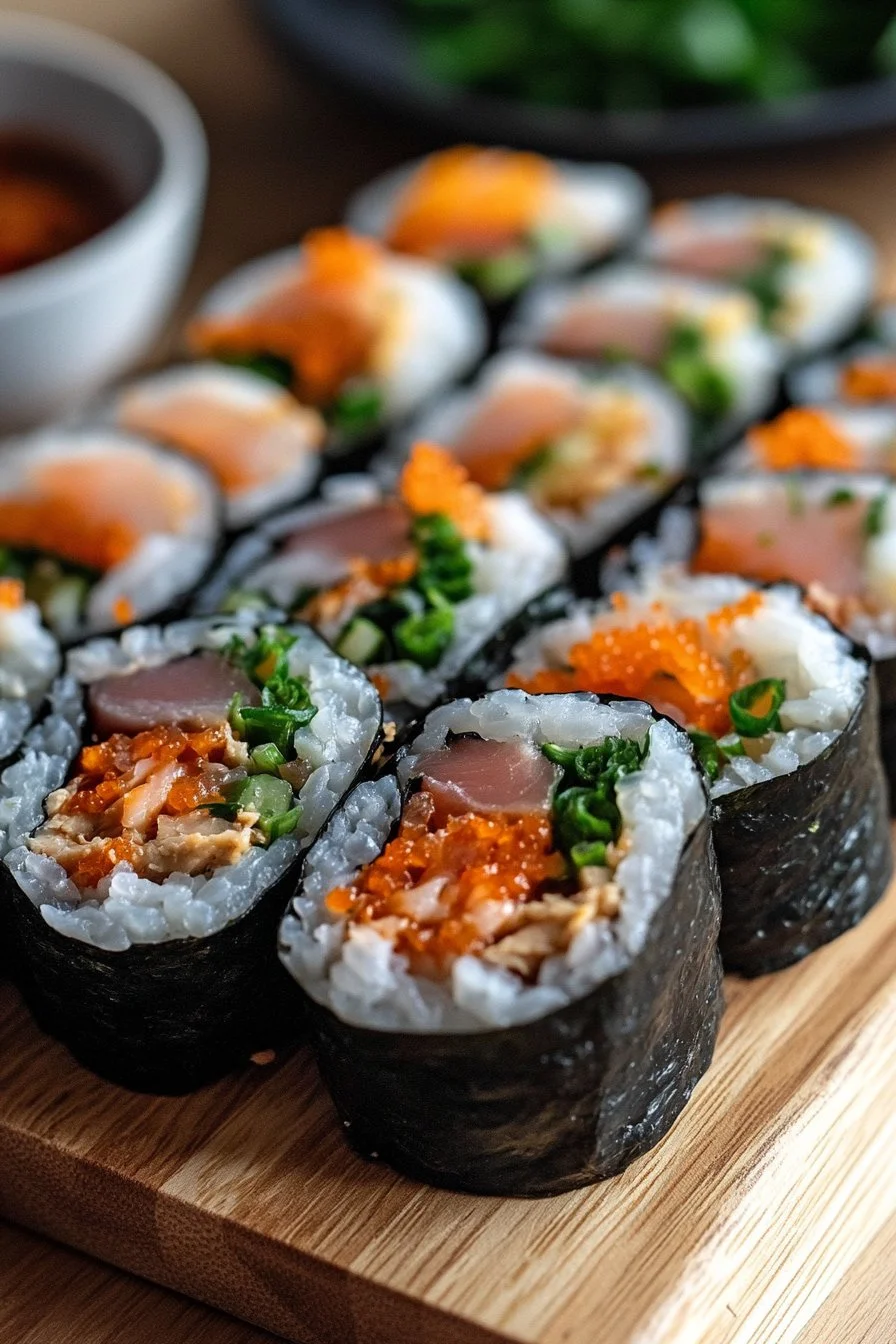
Crafting the Perfect Spicy Tuna Rice Rolls
Technique
In making spicy tuna rice rolls, proper technique plays a crucial role in achieving the best results. Begin with the rice; ensure it’s sticky enough to hold together but not so mushy that it becomes difficult to handle. The right consistency creates the perfect foundation for rolling.
When slicing the vegetables, aim for uniformity to ensure even flavor distribution in every bite. Consistent sizes also enhance the visual appeal.
Rolling takes practice, but with proper technique, you can create a tight roll. Start from the bottom and use the bamboo mat to help press the filling gently as you roll upwards. Finish by sealing the edge of the nori to secure the roll.
Tips/Tricks
Here are some essential tips for making your spicy tuna rice rolls even better. Use a damp cloth to keep your hands moistened during the rolling process. This prevents the rice from sticking to your fingers, allowing for cleaner handling and shaping.
If you’re looking for added flavor, consider toasting the nori slightly before using it. This enhances the nuttiness and gives the rolls a deeper taste. A quick pass over an open flame or a few seconds in a dry pan will do the trick.
Customizing your rolls is another fun way to enhance flavors. Add ingredients like avocado or bell pepper to introduce different textures and tastes. Consider adding more gochujang for an extra kick or adjusting the mayonnaise for a creamier texture.
Elevating Your Spicy Tuna Rice Rolls
Perfecting Results
Achieving the perfect spicy tuna rice rolls comes down to attention to detail. Make sure your filling is tasty, but be cautious not to overstuff. Overflowing rolls become messy and harder to slice cleanly. Each ingredient should complement the others without overpowering the overall balance.
Timing is essential during assembly. The rice should be warm enough to remain sticky but not hot enough to wilt the vegetables. Patience pays off when allowing the rice to cool slightly before assembling, as this preserves freshness.
Troubleshooting/Variations
In case your rice doesn’t hold together, the water content might be off. If the rice appears too dry, a small amount of additional water can help, but be careful not to oversaturate.
If you’re out of gochujang, try substituting it with sriracha for a different spice level. You can also experiment with various spices or sauces such as spicy mayonnaise or wasabi to create exciting flavor combinations.
If rolling proves challenging, consider making kimbap bowls. Just layer all the ingredients in a bowl over rice instead of rolling them up. This alternative provides the same delicious flavors in a different form, perfect for those still mastering rolling techniques.
Serving Spicy Tuna Rice Rolls
Presentation
When serving spicy tuna rice rolls, presentation matters. Arrange the sliced rolls on a vibrant platter, perhaps garnished with sesame seeds and fresh cilantro or green onions. This not only enhances the visual appeal but also tempts the taste buds before the first bite.
For a dipping sauce, serve sesame oil on the side. The richness of the oil perfectly complements the flavors in the rolls and adds a delightful finish. You can also offer soy sauce or a ponzu dipping sauce to enhance the flavor even further.
Pairings/Storage
These spicy tuna rice rolls pair beautifully with fresh salads or light vegetable sides. You might consider a simple cucumber salad dressed with rice vinegar to complement the rolls’ flavor profile.
For storage, keep any leftovers tightly wrapped in plastic wrap and refrigerate. Consume them within a day or two for optimal freshness. If the rice becomes dry, drizzle a bit of water over the rolls before enjoying them again, or consider steaming them briefly to revive moisture.
Spicy tuna rice rolls serve as an incredible way to bring delightful flavors to your dining table without fuss. Their convenience and adaptability make them perfect for any occasion, from family dinners to unique gatherings. Delight in the sensations and create your own variation with fresh ingredients, presenting a new family favorite.
Print
Spicy Tuna Rice Rolls
- Prep Time: 15 minutes
- Cook Time: 20 minutes
- Total Time: 35 minutes
- Yield: 4 servings
- Category: Main Course
- Method: Rolling
- Cuisine: Asian
- Diet: Pescatarian
Description
Easy and flavorful spicy tuna rice rolls that bring vibrant flavors to your dining table.
Ingredients
- 2 cups cooked short-grain rice
- 4 sheets seaweed (nori)
- 1 can drained tuna
- 2 tablespoons mayonnaise
- 1 tablespoon gochujang
- 4-6 perilla leaves or lettuce
- 1 julienned carrot
- 1 julienned cucumber
- Sesame oil to taste
- Salt to taste
Instructions
- In a bowl, mix the drained tuna with mayonnaise and gochujang. Season with salt as needed.
- Prepare the cooked rice and let it cool slightly.
- Place a sheet of seaweed on a bamboo mat.
- Spread a thin layer of rice over the seaweed, leaving about 1 inch at the top.
- Lay perilla leaves, tuna mixture, carrots, and cucumber in a line on the rice.
- Roll the kimbap tightly from the bottom using the bamboo mat.
- Seal the edge with a bit of water.
- Slice the roll into bite-sized pieces.
- Serve with sesame oil for dipping.
Notes
For added flavor, consider toasting the nori slightly before using it. Use a damp cloth to keep your hands moist while rolling.