
📑 Table of Contents ▶
Deep Fried Oysters
The crunch of a perfectly fried oyster always brings a rush of memories. Growing up near the coast, oysters were a staple at family gatherings. The sizzling sound of these shellfish hitting hot oil was a signal of good times ahead. My family loved to gather around the table, dipping freshly fried oysters into tangy sauces and squeezing bright lemon on top.
Deep-fried oysters represent comfort food at its finest. The crisp outer layer gives way to the tender, briny delicacy inside. Whenever I prepare deep fried oysters, I always get excited. It’s one of those dishes that embodies joy, friendship, and celebration. Once you taste them, you’ll understand why they hold a special place in my heart.
This recipe for deep fried oysters is straightforward, ensuring even novice cooks can dive into the frying frenzy with confidence. From the marination to the frying process, each step intensifies the flavor while keeping the dish simple. Making them at home allows you to enjoy this delicious treat more often, and trust me, your family will be asking for seconds.
Let’s embark on this culinary adventure and learn how to make the best deep fried oysters right at home.
Deep Fried Oysters
Fundamentals
Deep fried oysters require a few essential components for success. Understanding these fundamentals will help you master the frying process and make the best out of your oysters. Fresh, high-quality oysters are the star of the show. Their natural brininess adds a unique flavor that pairs beautifully with the crispy batter.
Achieving the perfect crispy texture relies on a few key elements. A good dredging station, hot oil, and precise frying time play crucial roles. The dredging process adds layers of texture and flavor, while hot oil ensures that the oysters fry quickly, maintaining their moisture.
Lastly, preparation is vital. Make sure to marinate the oysters and mix the dry ingredients beforehand. This will set the stage for a smooth cooking experience and allow you to focus on executing the frying perfectly.
Preparation/Setup
Preparing deep fried oysters involves several straightforward steps. Start by draining the oysters in a colander to remove excess liquid. This allows the batter to stick effectively, creating a delightful crunch when fried.
Next, combine the oysters with milk, hot sauce, and seafood seasoning in a bowl. Gently fold these ingredients to coat the oysters before refrigerating them. Letting them chill for at least 30 minutes enhances the flavor and helps the batter adhere better.
While the oysters marinate, you can set up your dredging station. Mix all-purpose flour, cornstarch, and an additional tablespoon of seafood seasoning in a shallow container. This will serve as your coating for the oysters and is key to achieving that desired crunch.
Ingredients
To create deep fried oysters, you will need the following ingredients:
- 2 pints raw shucked oysters
- ¾ cup milk
- 1 tbsp hot sauce
- 2 tsp seafood seasoning (plus 1 tbsp for dredging)
- 2 cups all-purpose flour
- ½ cup cornstarch
- 2-3 qt canola oil (for frying)
- 2 lemons, sliced into wedges
- Fresh parsley for garnish
These ingredients combine to create a dish bursting with flavor. The oysters’ oceanic taste complements the seasoned batter beautifully.
Directions
- Drain the oysters in a colander.
- Place oysters in a bowl and add milk, hot sauce, and 2 teaspoons of seafood seasoning. Gently fold the ingredients, then cover and refrigerate for at least 30 minutes, up to 8-10 hours.
- Prepare the dredge by combining all-purpose flour, cornstarch, and 1 tablespoon of seafood seasoning in a shallow container. Set aside.
- Heat canola oil in a large deep skillet or fryer to about 350 degrees F.
- Drain excess liquid from the marinated oysters. Toss oysters in the dredge mixture in small batches to coat completely, then shake off excess flour and place coated oysters on a tray.
- Carefully drop oysters into the hot oil without overcrowding. Stir gently to avoid sticking.
- Fry oysters until they begin to float, approximately 3-5 minutes. Remove with a strainer and transfer to a tray lined with paper towels. Season with seafood seasoning immediately.
- Serve with lemon wedges and garnish with fresh parsley.
Techniques
Perfecting the frying technique elevates your deep fried oysters. Control the oil temperature carefully; too hot and they burn, too cool and they turn greasy. Maintaining the heat around 350 degrees F allows even cooking and a crisp finish.
Dropping the oysters in small batches ensures that the oil temperature remains stable. Overcrowding the skillet drops the temperature and leads to soggy, unevenly cooked oysters. Following this simple rule promises a consistently crispy result.
Using a strainer helps remove the fried oysters while leaving excess oil behind. This technique ensures you achieve a light and crispy finish instead of a heavy, greasy product.
Tips/Tricks
Enjoying deep fried oysters can be even better with some handy tips.
-
Let oysters breathe: After dredging, allow them to sit for a few minutes on a tray before frying. This will help the coating stick better during cooking.
-
Keep an eye on the oil: Use a thermometer to check oil temperature before frying. This prevents undercooked or overcooked batches.
-
Experiment with flavors: Feel free to adjust the hot sauce and seafood seasoning to suit your taste. The recipe is versatile, allowing you to tailor it according to personal preferences.
With these techniques and tips, your fried oysters will be a guaranteed hit every time.
Perfecting Results
Achieving the perfect deep fried oysters is about trial and error. Your frying experience may differ based on size and type of oyster. Larger oysters may require additional cooking time, so adjust accordingly.
To ensure crispiness, always drain your oysters well after marinating. This helps prevent a soggy batter when frying. Additionally, ensure your frying oil remains at the right temperature for consistent results.
Troubleshooting/Variations
If you encounter any hiccups, don’t worry! Learning is part of the cooking journey. If your oysters turn out greasy, check your oil temperature or ensure you weren’t overcrowding the pan. This could change the frying dynamics and lead to less-than-perfect results.
You could also explore variations by changing the type of seafood seasoning. From Cajun to Old Bay, each adds a unique twist. Alternatively, trying different hot sauces or even incorporating spices into the dredge can enhance the flavor.
Serving and Presentation
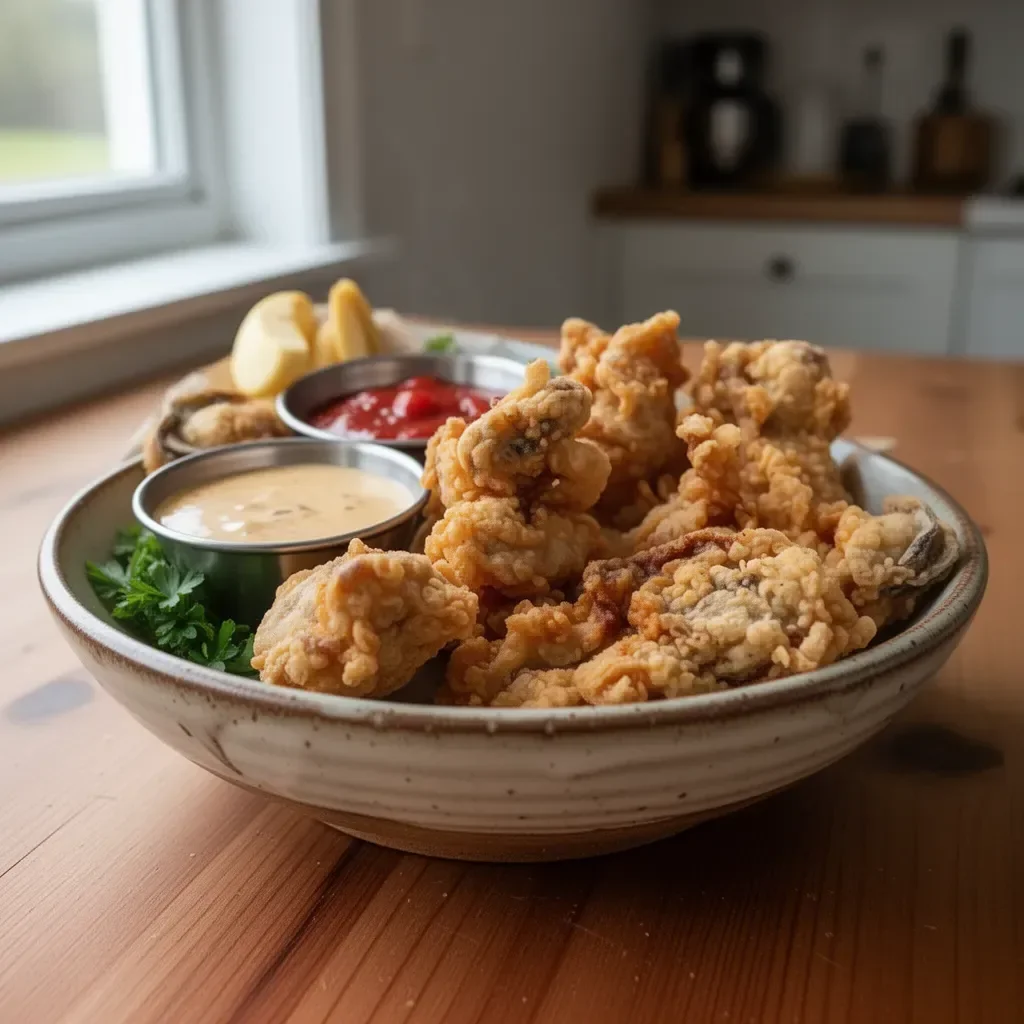
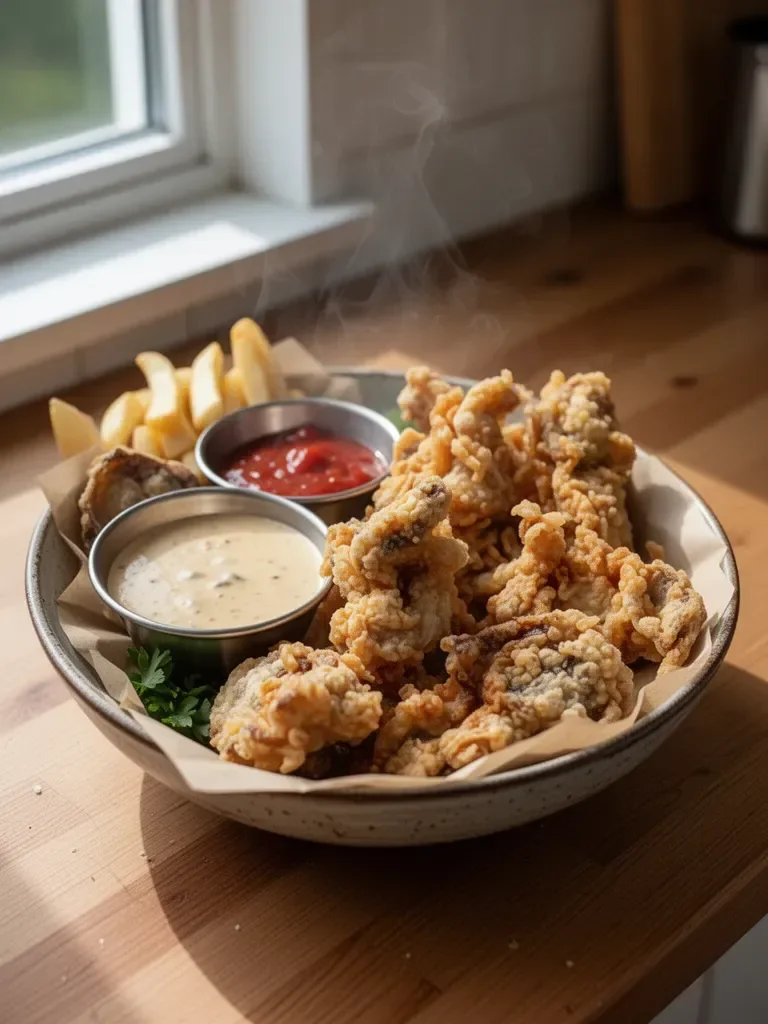
Serving deep fried oysters creates an inviting atmosphere. A vibrant dish garnished with fresh parsley and lemon wedges allows the natural beauty of the dish to shine. Lay the crispy oysters on a platter and arrange lemon wedges around for an eye-catching display.
Encourage guests to squeeze fresh lemon over their oysters before diving in. This adds a refreshing zesty flavor that balances the richness of the fried coating.
Pairings/Storage
Deep fried oysters pair beautifully with tangy sauces. Consider options like homemade remoulade, tartar sauce, or a spicy aioli for dipping. Pairing them with a crisp salad or coleslaw enhances the meal’s freshness and adds a vibrant contrast.
For storage, place any leftovers in an airtight container in the refrigerator. They can be reheated in an oven to restore crispiness, though they are best enjoyed fresh.
Conclusion
Deep fried oysters encapsulate the joys of coastal living and comfort food. The combination of tender oysters and crispy batter creates an unforgettable bite that celebrates flavor and tradition. From special occasions to casual family dinners, these delectable bites will undoubtedly please everyone. Each crunchy, flavorful oyster acts as a delicious reminder of good times spent together. Enjoy the cooking experience and share in the magic of deep fried oysters at home.
Print
Deep Fried Oysters
- Prep Time: 30 minutes
- Cook Time: 5 minutes
- Total Time: 35 minutes
- Yield: 4 servings
- Category: Appetizer
- Method: Frying
- Cuisine: Seafood
- Diet: Pescatarian
Description
Crispy and tender, these deep fried oysters are a delicious coastal treat that brings joy to any gathering.
Ingredients
- 2 pints raw shucked oysters
- ¾ cup milk
- 1 tbsp hot sauce
- 2 tsp seafood seasoning (plus 1 tbsp for dredging)
- 2 cups all-purpose flour
- ½ cup cornstarch
- 2-3 qt canola oil (for frying)
- 2 lemons, sliced into wedges
- Fresh parsley for garnish
Instructions
- Drain the oysters in a colander.
- Place oysters in a bowl and add milk, hot sauce, and 2 teaspoons of seafood seasoning. Gently fold the ingredients, then cover and refrigerate for at least 30 minutes, up to 8-10 hours.
- Prepare the dredge by combining all-purpose flour, cornstarch, and 1 tablespoon of seafood seasoning in a shallow container. Set aside.
- Heat canola oil in a large deep skillet or fryer to about 350 degrees F.
- Drain excess liquid from the marinated oysters. Toss oysters in the dredge mixture in small batches to coat completely, then shake off excess flour and place coated oysters on a tray.
- Carefully drop oysters into the hot oil without overcrowding. Stir gently to avoid sticking.
- Fry oysters until they begin to float, approximately 3-5 minutes. Remove with a strainer and transfer to a tray lined with paper towels. Season with seafood seasoning immediately.
- Serve with lemon wedges and garnish with fresh parsley.
Notes
Let oysters breathe after dredging for better coating adhesion. Adjust seasoning levels to suit personal taste.