
📑 Table of Contents ▶
Greek Fisherman’s Soup: Kakavia
Discovering Greek Fisherman’s Soup, or Kakavia, ignited an adventure in my kitchen. As a lover of hearty soups and fresh seafood, I craved something that captured the essence of the Mediterranean. Each spoonful of Kakavia tells a story of sun-soaked shores and fishermen who share their catch of the day with simple, wholesome ingredients. This dish has roots that run deep, reflecting a culinary tradition rich with flavors while focusing on vibrant, healthy ingredients.
Greek Fisherman’s Soup combines the gentle sweetness of fresh fish with a medley of vegetables, creating a comforting bowl brimming with flavor. Cooking this dish transports you to the coastline, where freshness reigns supreme. The delightful balance of textures and tastes invites you to gather around the table, making it a cherished meal for everyone.
Creating Kakavia means enjoying a beautiful blend of seasonal ingredients at their peak. As you dive into each step, you’ll appreciate how simple it is to create a meal that warms the heart and soul. Ready to embark on this culinary journey? Let’s explore the magic of Greek Fisherman’s Soup in detail.
The Essence of Kakavia
Fundamentals
Greek Fisherman’s Soup offers a delightful balance that perfectly highlights the natural flavors of its core ingredients. Whole white fish provides a delicate texture, while the vegetables contribute earthiness and depth. Together, they simmer into a warming broth that comforts anyone who enjoys a bowl.
Understanding the fundamental components of Kakavia helps you appreciate the simplicity of this dish. The fresh fish—be it red snapper, cod, or monkfish—carries the broth’s essence, and each ingredient plays an integral role. The carefully chosen vegetables bring sweetness and substance, making this soup a nutritious meal that shines with clarity.
Preparation/setup
Getting ready to make Kakavia begins with gathering your ingredients. This dish is approachable for cooks of any skill level. Start by ensuring your workspace is clean and organized. Set out the pond ingredients: fish, olive oil, and fresh vegetables. Finding a large pot or Dutch oven is crucial since the soup’s volume grows during cooking.
The preparation process is straightforward. First, clean your fish carefully to eliminate any impurities. Next, sautéing the vegetables enhances their flavors before you add the remaining ingredients. This step sets the foundation for a rich, savory broth that transforms a handful of simple ingredients into a culinary masterpiece.
Ingredients
To make Greek Fisherman’s Soup, gather the following ingredients:
- 2 pounds whole white fish (choose between red snapper, cod, and monkfish), scaled and cleaned
- ¼ cup olive oil
- 1 small onion, finely chopped
- 1 celery stalk, diced
- 2 garlic cloves, grated
- 3 potatoes, peeled and diced
- 1 (15-ounce) can of tomatoes, pureed
- Salt and pepper, to taste
- Lemon wedges, for serving
- 2 tablespoons fresh chopped parsley
- 7-8 cups of water
Directions
- Begin by placing the water and cleaned fish into a large pot. Season lightly with salt and bring the mixture to a boil.
- Once boiling, reduce the heat and let it simmer for about 20 minutes.
- Carefully transfer the fish to a platter and strain the broth through a fine mesh sieve.
- Return the wiped pot to heat, adding the olive oil, onion, and diced celery over medium heat. Sauté until the onion becomes soft.
- Grate the garlic and warm it in the mixture for an additional minute.
- Add the diced potatoes, seasoning with salt and pepper.
- Pour in the pureed tomatoes, cooking on medium-low heat for about 10 minutes.
- Return the strained stock to the pot, bring to a boil, and simmer until the potatoes are tender.
- While the soup simmers, remove any bones from the fish, cut it into chunks, and return it to the soup.
- Adjust seasoning as needed, garnish with fresh parsley, and serve hot with lemon wedges and toasted bread.
Mastering Kakavia
Technique
Mastering the technique of making Kakavia involves understanding the delicate balance between simmering and sautéing. Starting with fresh fish elevates this dish, as it contributes its natural flavors directly to the broth. Make sure not to overcrowd your pot while cooking the vegetables; they need space to caramelize, enhancing their sweetness.
Straining the broth after simmering helps concentrate the flavors, providing a deeply satisfying base for the soup. Additionally, adding the fish toward the end of the cooking process ensures it remains tender rather than overcooked. Every step counts toward creating a harmonious bowl of soup that delights and nourishes.
Tips/tricks
Creating the perfect bowl of Kakavia can come with a few challenges. One valuable tip is to taste your broth as it simmers. Adjust the seasoning carefully to find the right balance of salt and pepper.
If you wish to enrich the soup further, consider adding a splash of citrus juice or zest for an added dimension. Adjust the thickness of your soup by adding water or broth as needed, keeping the consistency hearty yet comforting. Cooking the potatoes to your desired texture allows you to personalize the heartiness of the dish.
Elevating Kakavia
Perfecting results
Achieving that ideal bowl of Greek Fisherman’s Soup involves focusing on quality ingredients and patience. Sourcing the freshest fish available will make a noticeable difference. Less than optimal ingredients lead to a lackluster soup that does not capture the vibrancy of traditional Kakavia.
Cooking the soup low and slow makes all the difference. Giving the flavors time to meld ensures each ingredient contributes to the final dish. Simmer until the potatoes become tender, and the broth thickens slightly—this will enhance the overall richness and texture.
Troubleshooting/variations
Sometimes, even the best recipes face challenges. If your soup seems thin, consider incorporating more vegetables or fish into the broth. You can also use a potato masher to mash some of the cooked potatoes back into the soup, enhancing its thickness.
If you can’t find fresh fish, frozen options can work in a pinch. The consistency might differ, but you will still enjoy a satisfying soup. Additionally, feel free to customize the vegetables based on seasonal availability or personal preference. Carrots or bell peppers can add additional flavors while maintaining the dish’s integrity.
Serving Kakavia
Serving/presentation
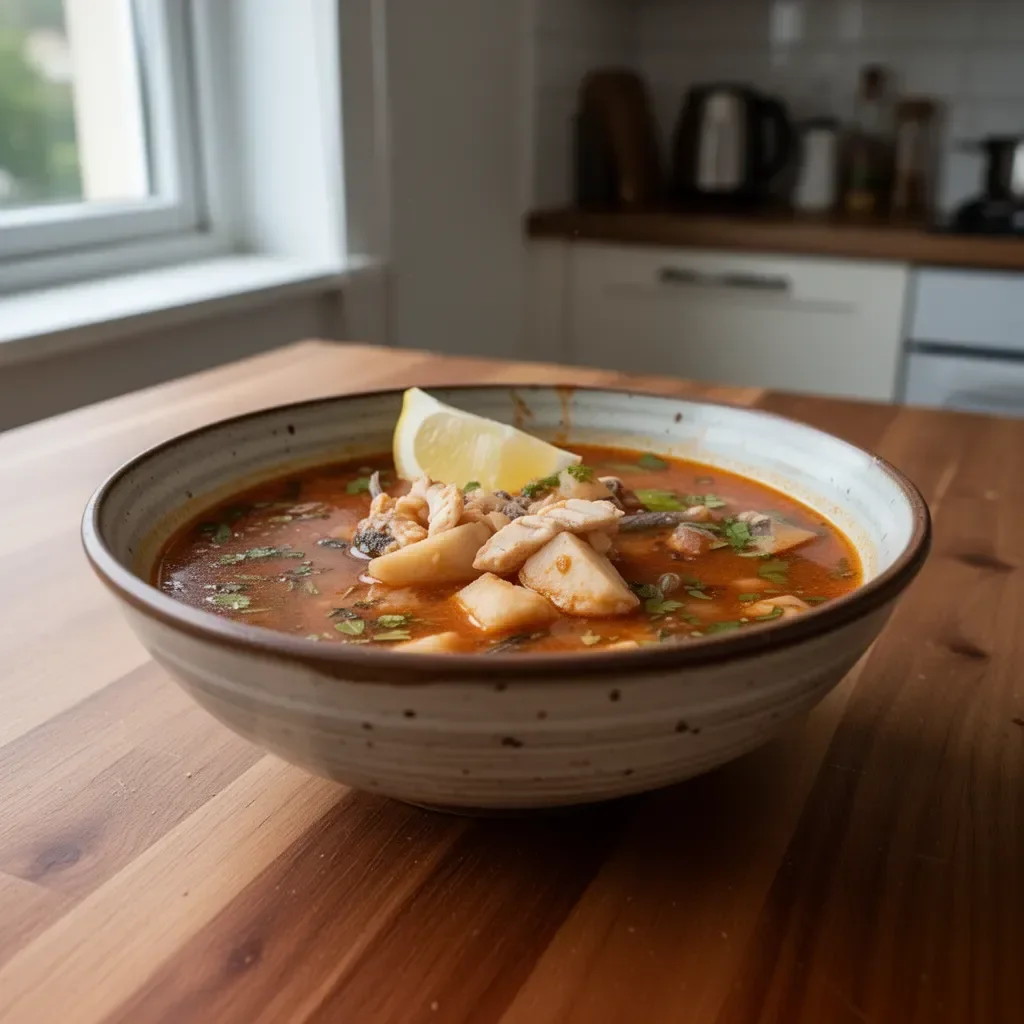
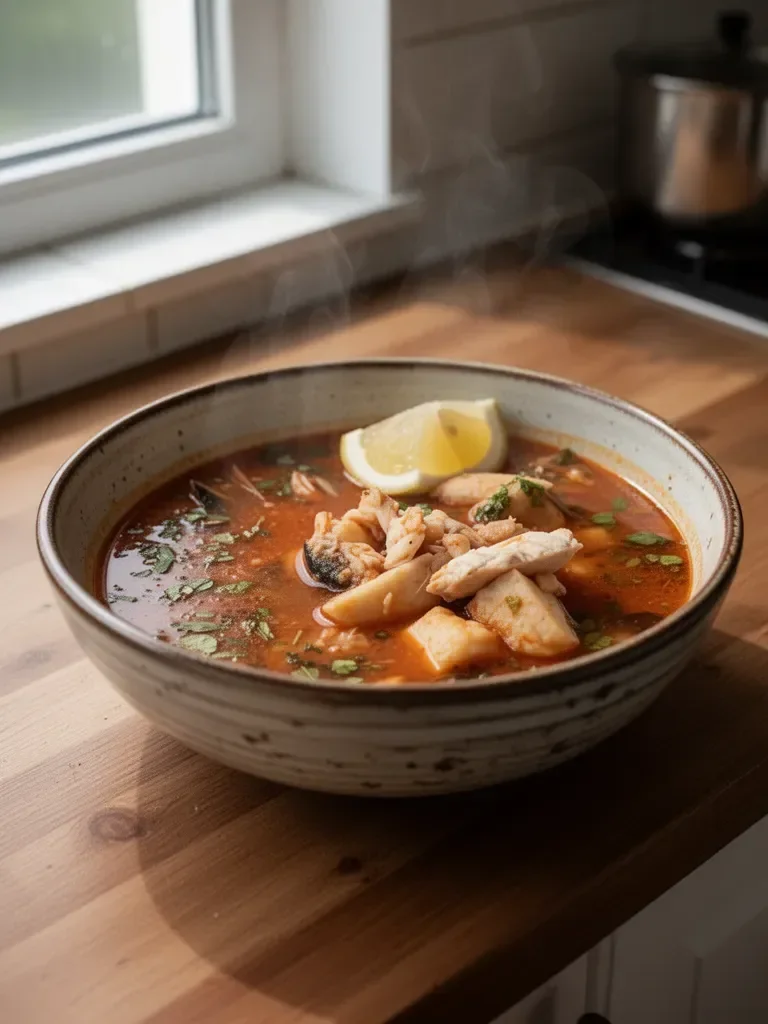
Presenting Greek Fisherman’s Soup is an opportunity to celebrate its rustic charm. Serve it in a shallow, wide bowl to showcase the colorful ingredients. Ladle the soup generously to let the fresh fish chunks and vibrant vegetables shine through.
Garnishing with freshly chopped parsley adds a pop of color and freshness, enhancing the dish’s overall appeal. The addition of lemon wedges provides a bright contrast, allowing guests to drizzle citrus over their serving for an extra layer of flavor.
Pairings/storage
Kakavia pairs beautifully with crusty bread, offering a perfect vehicle for soaking up the rich broth. For those who enjoy a light salad, consider a simple green salad with a lemon vinaigrette to complement the flavors.
When it comes to storage, leftovers keep well in the fridge for up to three days. Store any unused soup in an airtight container, and remember that the flavors will deepen overnight. Reheat gently on the stove to preserve the soup’s integrity, adding a splash of water if needed to restore desired consistency.
Creating Greek Fisherman’s Soup invites warmth and comfort into your kitchen. Each step contributes to a dish that captures the essence of the Mediterranean and celebrates the beauty of fresh ingredients. Stirring together this traditional soup not only nourishes the body but also connects to a rich culinary heritage that emphasizes simplicity and quality. Enjoy the process, and savor each bite of this delightful dish!
Print
Greek Fisherman’s Soup: Kakavia
- Prep Time: 15 minutes
- Cook Time: 30 minutes
- Total Time: 45 minutes
- Yield: 4 servings
- Category: Soup
- Method: Simmering
- Cuisine: Greek
- Diet: Pescatarian
Description
A hearty and comforting traditional Greek soup made with fresh fish and a medley of vegetables, capturing the essence of Mediterranean flavors.
Ingredients
- 2 pounds whole white fish (red snapper, cod, or monkfish), scaled and cleaned
- ¼ cup olive oil
- 1 small onion, finely chopped
- 1 celery stalk, diced
- 2 garlic cloves, grated
- 3 potatoes, peeled and diced
- 1 (15-ounce) can of tomatoes, pureed
- Salt and pepper, to taste
- Lemon wedges, for serving
- 2 tablespoons fresh chopped parsley
- 7-8 cups water
Instructions
- Begin by placing the water and cleaned fish into a large pot. Season lightly with salt and bring the mixture to a boil.
- Once boiling, reduce the heat and let it simmer for about 20 minutes.
- Carefully transfer the fish to a platter and strain the broth through a fine mesh sieve.
- Return the wiped pot to heat, adding the olive oil, onion, and diced celery over medium heat. Sauté until the onion becomes soft.
- Grate the garlic and warm it in the mixture for an additional minute.
- Add the diced potatoes, seasoning with salt and pepper.
- Pour in the pureed tomatoes, cooking on medium-low heat for about 10 minutes.
- Return the strained stock to the pot, bring to a boil, and simmer until the potatoes are tender.
- While the soup simmers, remove any bones from the fish, cut it into chunks, and return it to the soup.
- Adjust seasoning as needed, garnish with fresh parsley, and serve hot with lemon wedges and toasted bread.
Notes
For additional flavor, consider adding a splash of citrus juice or zest. Store leftovers in an airtight container in the fridge for up to three days.