
📑 Table of Contents ▶
- Kerala Prawn Curry: Fundamentals
- Fundamentals
- Preparation/Setup
- Directions
- Kerala Prawn Curry: Enhancing Your Technique
- Technique
- Tips/Tricks
- Kerala Prawn Curry: Perfecting Your Results
- Perfecting Results
- Troubleshooting/Variations
- Kerala Prawn Curry: Serving and Storage
- Serving/Presentation
- Pairings/Storage
- Conclusion
Kerala Prawn Curry
There’s something mesmerizing about the aroma of Kerala prawn curry simmering on the stove. Memories of family gatherings and festive occasions flood in as I recall watching my grandmother prepare this dish, her hands moving effortlessly among spices and fresh ingredients. The vibrant colors and complex flavors of this dish symbolize the culinary richness of Kerala.
Growing up, enjoying Kerala prawn curry became a cherished tradition. The dish speaks to my heart, wrapping me in warm nostalgia, as the taste transports me back home, regardless of where I am. Sharing this dish becomes sharing a piece of my culture—a way to bring loved ones together around a table filled with warmth and flavor.
As the savory scents waft through the room, excitement builds. Cooking Kerala prawn curry stirs not just the taste buds but also the spirit. It’s about more than just a meal; it’s about connection, love, and crafting something beautiful to share. Let’s dive into the world of Kerala prawn curry, where every ingredient plays a vital role in creating this delightful feast.
Kerala Prawn Curry: Fundamentals
Fundamentals
Creating authentic Kerala prawn curry relies on a harmonious blend of ingredients and traditional techniques. This dish celebrates the coastal flavors of Kerala, showcasing prawns, spices, and creamy coconut milk. The Malabar tamarind adds a delightful tang that sets this dish apart, while aromatic spices elevate its essence.
Understanding these fundamental aspects will help you create a rich and satisfying curry. The role of each ingredient is crucial, as they contribute to the final masterpiece. From the spiciness of Kashmiri chili powder to the earthiness of fenugreek, each element plays a part in creating the dish’s signature taste.
Preparation/Setup
Before starting, ensure you have all your ingredients ready. Soak the Malabar tamarind in hot water for about 10-15 minutes, allowing its unique flavors to release. While it’s soaking, prepare the rest of your ingredients: dice the onion, cube the tomato, and clean the prawns. This step speeds up the cooking process and ensures everything comes together seamlessly.
The right preparation not only saves time but also helps maintain the dish’s integrity. Once you’ve done that, you’re ready to move into the cooking stage. Gather all the ingredients, including the spices and coconut milk, so they’re accessible during cooking. This strategy helps create a smoother cooking experience.
Ingredients
- 1 piece Malabar tamarind (soaked in hot water)
- 2 tbsp coconut oil
- ¼ tsp fenugreek seeds
- 1 small onion (diced)
- 1 tsp minced garlic
- ¾ tsp minced ginger
- ½ tomato (cubed)
- 1 sprig fresh curry leaves
- ¾ tsp Kashmiri chili powder
- ¼ tsp turmeric powder
- ¾ tsp fennel powder
- ½ tsp coriander powder
- ¼ tsp black pepper powder
- ½ tsp salt
- 250 g fresh large prawns (cleaned, shelled & deveined)
- 200 ml coconut milk
- 1 wedge lime
Directions
- Soak a piece of Malabar tamarind in a small bowl of hot water for 10-15 minutes. Add enough water to submerge the fruit.
- Heat coconut oil in a pot or pan over low to medium heat. Add fenugreek seeds and let them sizzle, turning golden quickly.
- Add the diced onions and sauté until golden brown.
- Stir in the minced ginger and garlic, cooking for an additional 1-2 minutes.
- Introduce the cubed tomato and fresh curry leaves, sautéing until the tomatoes soften.
- Sprinkle in the spices: Kashmiri chili powder, turmeric powder, fennel powder, coriander powder, black pepper powder, and salt. Stir well.
- Bring the soaked Malabar tamarind to the pot with the water it soaked in. Stir and cook for another 1-2 minutes.
- Add the prawns gently and cook for 3-5 minutes until they turn pink and opaque.
- Pour in the coconut milk and let it simmer for an additional 2-3 minutes.
- Finish with a squeeze of lime juice and garnish with more curry leaves or fresh coriander.
Kerala Prawn Curry: Enhancing Your Technique
Technique
Mastering the right technique can elevate your Kerala prawn curry from good to exceptional. Pay close attention to the precision of your cooking times. Overcooking the prawns can lead to a rubbery texture, while undercooked prawns may not fully absorb the exquisite flavors of the curry.
Utilizing fresh ingredients serves as another key technique. Fresh prawns and aromatic spices will offer a depth of flavor that dried or old products simply can’t match. Cooking at the right temperature is vital too; aiming for low to medium heat allows the spices to bloom without burning.
Tips/Tricks
A few simple tricks can transform the dish significantly. For instance, using a heavy-bottomed pot or pan helps maintain consistent heat. Additionally, stirring gently prevents the ingredients from sticking and encourages even cooking. Don’t underestimate the importance of tasting as you cook, adjusting the spices and salt to suit your palate.
If you prefer a thicker curry, allow it to simmer longer after adding the coconut milk. Alternatively, you can introduce additional coconut milk or a splash of water to achieve your desired consistency. Peaks of flavor await those who explore personal preferences.
Kerala Prawn Curry: Perfecting Your Results
Perfecting Results
Perfecting your Kerala prawn curry revolves around careful ingredient selection and meticulous cooking processes. Fresh prawns are essential for achieving that tender bite, while the right balance of spices ensures the dish embodies a harmonious flavor profile. Experimenting with quantities allows for personalization and achieves your ideal taste.
Also, incorporating fresh herbs as a garnish afterward enhances the visual appeal and taste. Fresh curry leaves or cilantro add a vibrant touch, inviting intrigue with every serving. Consider your serving method too. A beautiful presentation elevates the experience of your Kerala prawn curry, transforming it into a feast for the senses.
Troubleshooting/Variations
Common issues may arise, such as balancing spice levels or achieving optimal thickness. If the curry becomes too spicy, adding coconut milk can help mellow the heat. Alternatively, reducing the quantity of chili powder while cooking serves as a preventative measure.
If you accidentally make the curry too watery, continue simmering until it reaches your desired thickness. If time permits, allow it to rest before serving, as flavors deepen and develop further. Exploring variations such as adding vegetables or adjusting spice levels caters to diverse tastes while allowing creativity in your cooking.
Kerala Prawn Curry: Serving and Storage
Serving/Presentation
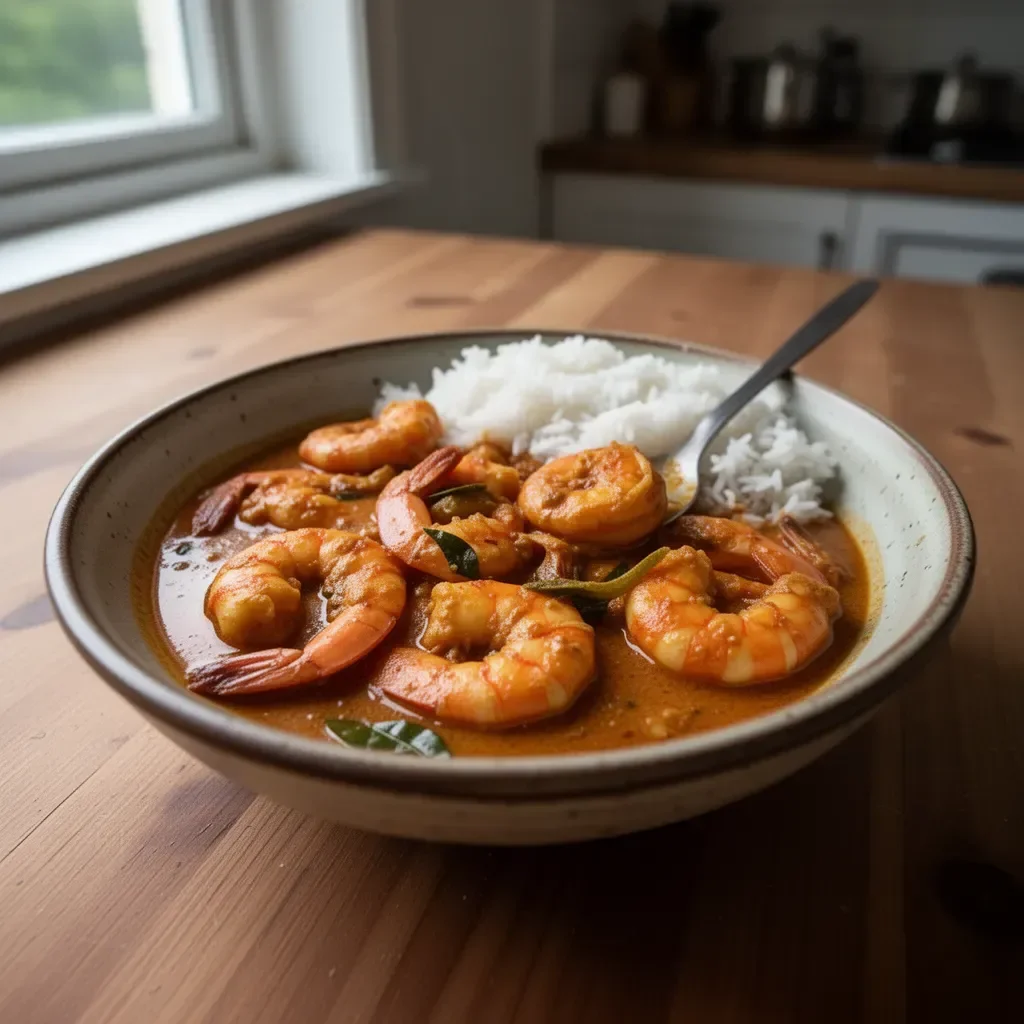
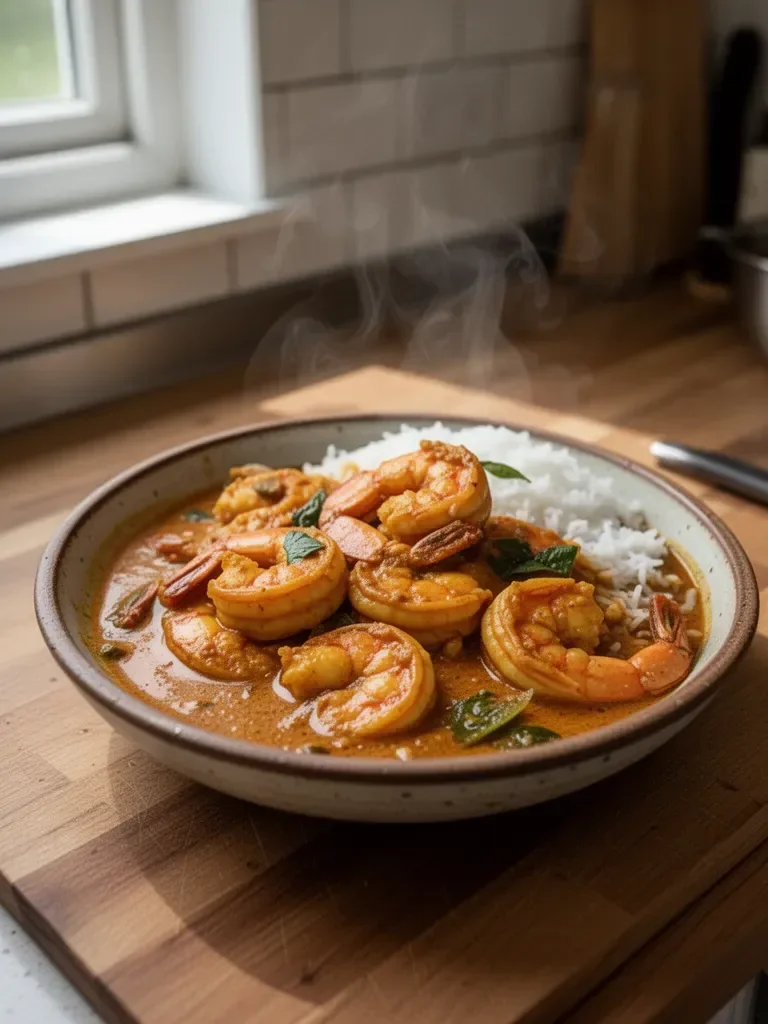
Serving Kerala prawn curry beautifully enhances the dining experience. Use a large bowl or platter and ensure it’s warm, as it keeps the curry at an inviting temperature. Garnish with fresh curry leaves or a sprinkle of cilantro to create an eye-catching presentation.
Pairing it with steamed rice, dosa, or even flatbreads can round out the meal perfectly. Offering a wedge of lime as a table garnish invites guests to add a burst of brightness to their dish according to their taste.
Pairings/Storage
This delightful curry pairs beautifully with various side dishes. Steamed jasmine rice or soft appams complement the flavors exquisitely. Opting for fresh salads can also add a refreshing crunch to the meal.
When it comes to storage, allow any leftovers to cool completely before transferring them to an airtight container. The curry will stay fresh in the refrigerator for up to three days. Reheating gently on the stovetop preserves its flavors, ensuring you can continue to enjoy this traditional dish.
Conclusion
The heart of Kerala prawn curry lies in the intricate layering of flavors, inviting you to explore a rich gastronomic experience. By understanding the fundamentals, mastering techniques, and perfecting results, anyone can create a vibrant dish that embodies the essence of Kerala. Serving this curry not only satisfies but creates lasting memories at the dinner table, defining culinary moments that linger long after the last bite. Enjoy the journey of making Kerala prawn curry and the joy it brings to your culinary adventures.
Print
Kerala Prawn Curry
- Prep Time: 15 minutes
- Cook Time: 20 minutes
- Total Time: 35 minutes
- Yield: 4 servings
- Category: Main Course
- Method: Stovetop
- Cuisine: Indian
- Diet: Seafood
Description
A vibrant and flavorful dish from Kerala, infused with spices and creamy coconut milk, perfect for family gatherings.
Ingredients
- 1 piece Malabar tamarind (soaked in hot water)
- 2 tbsp coconut oil
- ¼ tsp fenugreek seeds
- 1 small onion (diced)
- 1 tsp minced garlic
- ¾ tsp minced ginger
- ½ tomato (cubed)
- 1 sprig fresh curry leaves
- ¾ tsp Kashmiri chili powder
- ¼ tsp turmeric powder
- ¾ tsp fennel powder
- ½ tsp coriander powder
- ¼ tsp black pepper powder
- ½ tsp salt
- 250 g fresh large prawns (cleaned, shelled & deveined)
- 200 ml coconut milk
- 1 wedge lime
Instructions
- Soak a piece of Malabar tamarind in a small bowl of hot water for 10-15 minutes. Add enough water to submerge the fruit.
- Heat coconut oil in a pot or pan over low to medium heat. Add fenugreek seeds and let them sizzle, turning golden quickly.
- Add the diced onions and sauté until golden brown.
- Stir in the minced ginger and garlic, cooking for an additional 1-2 minutes.
- Introduce the cubed tomato and fresh curry leaves, sautéing until the tomatoes soften.
- Sprinkle in the spices: Kashmiri chili powder, turmeric powder, fennel powder, coriander powder, black pepper powder, and salt. Stir well.
- Bring the soaked Malabar tamarind to the pot with the water it soaked in. Stir and cook for another 1-2 minutes.
- Add the prawns gently and cook for 3-5 minutes until they turn pink and opaque.
- Pour in the coconut milk and let it simmer for an additional 2-3 minutes.
- Finish with a squeeze of lime juice and garnish with more curry leaves or fresh coriander.
Notes
Using fresh prawns and spices enhances the flavor. Adjust spices according to taste.